
Biophilic interior design brings nature into the rooms where you actually live, through daylight, views, plants, natural materials, fresh air and organic shapes. It is not a plant collection, and it is not a style you buy in one shopping trip. It is a way of deciding what a room should feel like, then choosing the few nature connections that do the most work in that room.
Most guides on this subject stop at plants. That order is backwards. Light and views come first, materials second, and plants last, matched to the light each spot really gets. A plant in the wrong light fails within weeks. A wooden table in the right light works for decades.
What Biophilic Design Is
Biophilia means a love of living things. Biologist E. O. Wilson popularized the term in his 1984 book Biophilia, arguing that people have an innate tendency to connect with nature and living systems. Biophilic design applies that idea to buildings. It increases sunlight, greenery, natural materials and views so interiors support wellbeing instead of simply providing shelter.
The most cited framework is the 14 Patterns of Biophilic Design, published by Terrapin Bright Green in 2014 and written by William Browning, Catherine Ryan and Joseph Clancy. The report drew on more than 500 publications on human responses to nature. Its 14 patterns fall into three groups.
Nature in the space covers direct contact with nature: a view of trees, the sound of water, a breeze through an open window, daylight that shifts through the day. Natural analogues cover indirect contact: wood grain, stone, curved forms, leaf patterns, colors drawn from soil and foliage. Nature of the space covers how a room is arranged: a long view across a room, a sheltered seat with its back protected, a partly hidden view that invites you further in.
That structure matters because it stops biophilic design from becoming decoration. A room can be biophilic with one plant and a good window, and a room can hold twenty plants and still feel sealed off from the outdoors.
How Biophilic Design Differs From Minimalism and Japandi
Minimalism works by subtraction. It removes objects, hides storage and keeps the palette tight until the room feels calm. Biophilic design works by connection. It adds nature back in, through light, air, texture and living things, and it can sit on top of almost any style. A biophilic Japandi room and a biophilic industrial room look nothing alike, because the nature layer is added to a different base.
Japandi shares some of the same materials, pale wood, linen, stone, handmade ceramics, and the same respect for empty space. The difference is the goal. Japandi aims for restraint and quiet order. Biophilic design aims for a felt link to the outdoors, and it is willing to add a plant, a water sound or a view-framing change that Japandi might edit out. If you already like Japandi, biophilic ideas slot into it easily. They do not replace it.
The other common confusion is equating biophilic with a jungle look. Dense planting in every corner is one version, and it is the version that fails most often in real homes, because the plants outgrow the light and the care routine. A calmer version, fewer plants, better light, more wood and stone, usually lasts longer and reads as more natural.
Start With Light and Views
Daylight is the strongest biophilic element in most homes, and it costs nothing to use better. Start by clearing what blocks the window. Move tall furniture off the sill, take down heavy curtains, wash the glass, and trim back any indoor object that cuts the view in half. Sheer linen or a light voile filter glare without shutting out the sky. In a living room, arrange the main seat so it faces the window or the garden view, not a blank wall, when the layout allows it.
Window direction shapes what grows and what feels bright. In the United States, a south or southwest window is the brightest spot in the house, a north window or a dim corner is the lowest light, and an east window or a spot beside a west window out of direct sun sits in the middle. That is a planning guide from the University of Minnesota Extension, and it is the reason plant advice should always start with the window, not the plant. A south-facing sill that bakes in summer sun will scorch a fern, while the same fern can thrive a few feet back from an east window.
Artificial light should follow the same logic. Layer it instead of relying on one bright ceiling fixture. A paper or linen pendant, a floor lamp with a fabric shade and a small table lamp give a room the shifting, diffuse quality of daylight. Warm bulbs around 2,700K to 3,000K keep the evening mood consistent with the materials in the room. Cool white downlights everywhere flatten wood, linen and skin alike, and they undo the warmth the rest of the room is building.
Views matter even when they are modest. A window onto a street tree, a courtyard or a small garden counts. If the view is a brick wall, frame it less and bring the nature inside instead: a plant on the sill, a wood shelf, a stone object. A mirror placed to catch a window view can carry daylight deeper into a room, but it works best opposite or beside the window, not facing a wall of clutter.
Air, Sound, Scent and Touch
Biophilic design reaches more than the eyes. The nonvisual patterns in the Terrapin framework cover sound, scent, touch, temperature and airflow, and they are often the cheapest to add.
Fresh air is the simplest. Open windows on opposite sides of a room when the weather allows it, even for a short period, so air moves instead of sitting still. A ceiling fan on a low setting creates the same gentle movement indoors. In a kitchen, an operable window over the sink does more for the room than a scented candle, because it carries cooking steam out and garden air in.
Sound can be natural without a speaker system. A small tabletop fountain gives a steady water sound that masks household noise in a home office or reading corner. In a bathroom, a rain showerhead gives the same effect at a larger scale. Keep the scale honest. A large fountain in a small apartment becomes a maintenance job and a humidity problem, while a small one on a side table does the job quietly.
Scent works through real materials rather than sprays. Fresh herbs on a kitchen sill, cedar in a closet, a linen spray made from a plant you actually grow, all read as part of the room. Strong artificial fragrance fights the effect, because the nose notices the mismatch before the mind names it.
Touch is where materials earn their place. Wood with visible grain, unglazed ceramic, rough linen, cool stone underfoot: these are the surfaces hands and feet meet every day. A room that looks natural but feels like plastic at every touchpoint does not hold the effect for long.
Natural Materials and Organic Shapes
Choose a small material palette and repeat it through the house. Oak, ash or walnut for tables and shelving, with the grain visible instead of painted over. Stone or ceramic for bathroom and kitchen surfaces. Linen, cotton and wool for bedding, curtains and cushions. Rattan, bamboo and cork for baskets, pendants and small furniture. The point is not to use every natural material at once. Two or three, repeated, read as intentional. Seven, scattered, read as a theme park.
Furniture shapes matter as much as materials. Curved edges, arched forms, oval tables and rounded chair backs echo the shapes found outdoors, and they soften rooms full of rectangles. One curved piece per room is usually enough: an arched mirror in a hallway, a round dining table, a curved headboard. A room full of curves becomes hard to furnish and harder to clean around.
A common mistake is buying wood-look plastic or printed stone and expecting it to age like the real thing. It does not. It looks right from the doorway and wrong from the chair. If the budget only stretches to one real material, put it where hands touch it most: a solid wood dining table, a stone bathroom shelf, a linen curtain. Let the less touched surfaces be plain and quiet instead of fake.
Color From Nature, Without Leaf Wallpaper Everywhere
A biophilic palette starts with the colors of soil, stone, bark and foliage, kept muted. Warm off-white and bone for walls, sand and clay for larger textiles, sage and olive for accents, charcoal or deep brown for grounding. Terracotta and rust add warmth in small amounts, and a deep green works as an accent wall or a single upholstered piece.
The mistake is painting every wall green and covering every surface in leaf prints. One nature pattern per room is a useful limit. A botanical print above a bed, or a leaf-patterned cushion on a plain sofa, gives the reference without turning the room into a mural. The rest of the room should stay plain enough for that one pattern to breathe.
Paint choice deserves the same restraint. A flat or matte finish suits limewash, clay paint and plaster textures, which give a wall a soft, slightly varied surface instead of a flat perfect one. Glossy paint on a feature wall fights the natural materials next to it and shows every mark.
Plants That Match the Light
Plants come last in the order for a practical reason: they are the only biophilic element that can die. Choose them by the light of the exact spot, not by the look of the plant in the shop.
Low light suits snake plant and ZZ plant, which tolerate a north window or a dim corner and need little water. Medium light suits pothos and peace lily, which do well near an east window or beside a west window out of direct sun. High light suits fiddle leaf fig and most herbs, which want a south or southwest window and will sulk further back in the room. Ferns and orchids suit bathrooms with a window, because they like humidity and filtered light.
Buy fewer plants than the photos suggest. Three to five plants in a living room, chosen for their spots, look better after six months than fifteen plants bought at once. A large plant in a corner, a trailing plant on a shelf and a small plant on a desk give height, movement and a focal point without turning care into a chore. Group plants with similar water needs together so watering becomes one routine, not five separate ones.
Two claims about plants deserve a correction. Houseplants do not clean indoor air in any meaningful way in a real home. The widely quoted 1989 NASA study used small sealed chambers that do not reflect real rooms, a point summarized by the University of Washington horticulture library. Plants are still worth having, for the view, the texture and the routine of care. They are not an air purifier, and selling them as one sets the reader up for disappointment. Health claims in general should stay modest. Research summarized in reviews of biophilic design reports faster stress recovery in natural settings than in urban ones, and a real view of nature through a window was more mentally restorative than a screen showing nature or a blank wall. The same reviews note that evidence on direct psychological effects is still limited, so treat biophilic design as a sensible comfort strategy, not a medical treatment.
Water, in a Size the Room Can Carry
Water is the most underused biophilic pattern indoors, and the easiest to get wrong by scale. A small tabletop fountain on a sideboard, a rain showerhead, a stone basin in a bathroom, or a view of a garden pond from the kitchen window all count. A large indoor water feature in a small home does not. It adds humidity, noise and cleaning, and it dominates a room that should feel calm.
In a bathroom, water is already present, so the work is to make it visible and pleasant: a clear glass shower screen instead of a curtain, a window that opens, stone tiles that stay cool underfoot. In a living room or office, a fountain should be small enough to lift with one hand for cleaning, and placed where a spill will not reach electronics or books.
Prospect and Refuge: How the Layout Should Feel
The spatial patterns in the Terrapin framework explain why some rooms feel right and others do not. Prospect is an open view over a distance, the ability to see across a room or out of a window. Refuge is a sheltered spot with its back protected, a reading chair in a corner, a bed with a solid headboard, a window seat with sides that enclose it.
A good room offers both. A sofa that faces the room and the window gives prospect. A chair tucked into a corner with a lamp and a side table gives refuge. A room with prospect and no refuge feels exposed, like a waiting area. A room with refuge and no prospect feels closed in, like a cellar. The fix is usually a furniture move, not a purchase: turn the desk to face the room instead of the wall, pull a chair out of the corner so it can see the window, leave a clear sightline from the door to the far window.
Mystery, the third spatial idea, is a partly hidden view that invites you further in: a hallway that curves, a plant that partly screens a reading nook, a garden path visible through a doorway. It works in larger homes and open plans. In a small apartment, one such moment is enough, and forcing more makes the flat feel cramped.
Room by Room
Living room

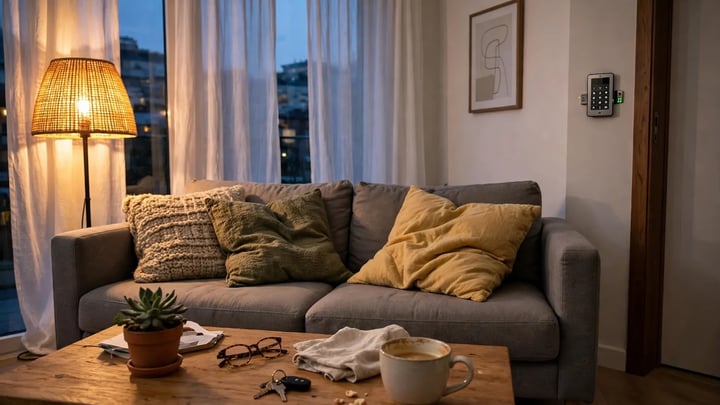
Keep the window wall as clear as the layout allows, and put the main seat where it can see outside. Use wood and linen for the largest pieces, a rug in a natural fiber, and one large plant in a corner rather than a shelf of small pots. A stone or ceramic object on the coffee table gives a cool touchpoint against the soft textiles. If the room faces a garden, the garden is part of the room, so keep the sightline open and the curtains light.
Bedroom

A bedroom should be the calmest biophilic room in the house, because it is where the day ends. Linen bedding, a wood bed frame, a wool throw and a single low light plant such as snake plant or peace lily are enough. Keep planting simple here, since a bedroom that needs daily plant care stops feeling restful. If the window gets morning sun, sheer curtains let it in without glare. A view of trees from the bed is worth more than any wall art.
Kitchen and dining

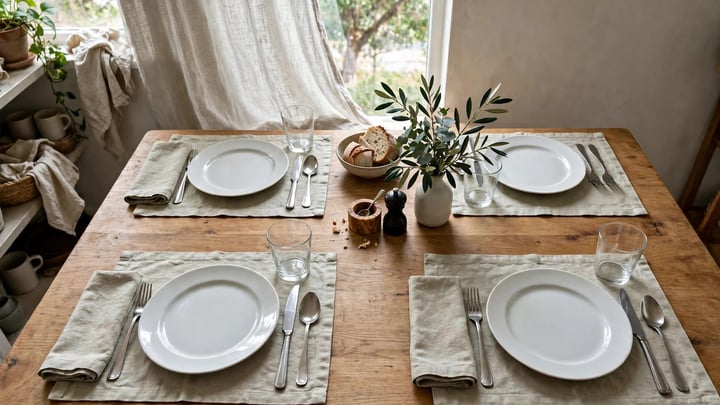
A kitchen is full of hard surfaces, so nature has to work in small, practical ways. A herb garden on a sunny windowsill, basil, mint and rosemary in small pots, gives scent, color and something to cook with. A wood chopping board left out, a stone worktop, open shelving in oak and a bowl of fruit on the table all add warmth without adding clutter. Keep the herb pots where they get light and where water will not pool on the sill. A dining table in solid wood, with chairs that can be pulled out without hitting a plant stand, keeps the room usable.
Bathroom

Bathrooms suit biophilic design because they are already humid and often tiled in stone. Ferns, pothos and orchids thrive where there is a window and steam, and they soften hard tile and sanitaryware. A teak bath mat, a stone shelf and a wood-framed mirror add warmth without fighting moisture. If the bathroom has no window, skip live plants and use the materials instead: stone, wood, linen towels and daylight-toned bulbs. A plant slowly failing in a dark bathroom is worse than no plant at all.
Home office

Place the desk near a window when possible, facing the view or the room rather than a blank wall. A small desk plant such as ZZ plant or philodendron adds life without taking workspace, and a wood desk organizer keeps the surface calm. Warm task lighting matters here, because a cold overhead light makes wood and plants look flat by mid-afternoon. A short view break, looking out of the window for a minute between tasks, is a practical habit that the layout should make easy.
Entryway
An entryway sets the tone for the whole house. A wood bench or console, a woven basket for shoes, a mirror that catches daylight from a nearby room, and one plant by the door give a natural first impression in very little space. Keep the floor clear, because an entryway that is hard to walk through tells the visitor the house is hard to live in, whatever the decor says.
For Renters, Small Budgets and Rooms With Little Light
Biophilic design is often presented as a renovation project: bigger windows, skylights, a living wall. Most readers need the renter version. Start with what can move with you. Sheer curtains, a linen throw, a wood side table, a stone vase and three plants in good pots cost less than one large furniture piece and change the room more.
A living wall is the most expensive and most failure-prone version of this idea. It needs irrigation, light and regular care, and it is the first thing to fail in a rental. A single large plant, a trailing plant on a shelf and a herb pot on the sill give most of the effect at a fraction of the cost and the risk.
Rooms with little natural light need a different order. Work on materials, color and artificial light first, and choose plants only for the spots that do get light. A windowless bathroom gets stone, wood and warm light, not a fern. A north-facing living room gets pale wood, warm white walls and a large mirror, not a fiddle leaf fig. If a plant keeps failing in the same spot, the spot is wrong, not the plant, and the honest fix is to move the plant or choose a tougher one.
Mistakes That Break the Look
A common mistake is buying plants before fixing the light. The plants fail, the owner buys more, and the room ends up with a row of struggling pots and a bill for replacements. Fix the window first, then buy the plant that suits it.
A common mistake is confusing biophilic with maximalist. Filling every surface with plants, patterns and natural objects creates visual noise, which is the opposite of the calm the style promises. Leave empty space on purpose, so the nature that is there can be seen.
A common mistake is using fake nature as a shortcut. Plastic plants, printed wood grain and leaf wallpaper in every room look convincing in a photo and unconvincing in person. One good faux plant in a dark corner is a reasonable compromise. A room full of them is not.
A common mistake is ignoring maintenance. A plant wall nobody waters, a fountain nobody cleans and a herb garden nobody harvests all become reminders of a job undone. Choose a care routine you will actually keep, and let the room fit that routine rather than the other way around.
Building It in Order
Work through the changes in this sequence, and stop when the room feels alive rather than when the list runs out. Clear the windows and the view first. Then change the light, swapping heavy curtains for sheer ones and adding a warm lamp where the ceiling light was doing all the work. Then add one or two natural materials where hands touch them most. Then add plants, matched to the light, a few at a time. Water, sound and scent come last, in small doses.
That order keeps the spending low and the failures few. A room that gets daylight, fresh air and a piece of real wood will feel more connected to nature than a room that got twenty plants and nothing else.




Leave a Reply
You must be logged in to post a comment.