
If I had to sum up Christmas decorating in 2026 in one sentence, it would be this: people want rooms that look collected over the years, not bought in one boxed set. Rich color, real texture, dried fruit, velvet and warm candlelight are doing most of the work, and the decorating has finally wandered beyond the tree into entryways, staircases, kitchens and even bathrooms.
The 30 ideas below are organized room by room, so you can take one space at a time and stop the moment the house feels done. I’ve included the measurement or detail that decides whether each idea works, because that’s usually the difference between “pulled together” and “almost.” One piece of advice before you start: pick a palette of two or three colors and let every room borrow from it.

Entryway and Front Door
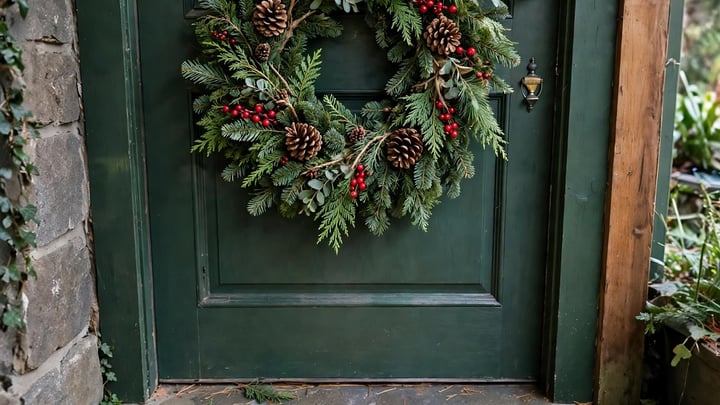
1. An oversized velvet bow on the door wreath
Swap the small bow for one big velvet bow, and a plain greenery wreath suddenly carries the whole door. Size matters here. Retailers generally suggest a wreath of about 24 to 30 inches for a standard 36-inch door, with 28 to 30 inches for a bolder look. The bow should scale with it: wide loops, long tails, and wired ribbon so it holds its shape in the weather. (Sources: Ballard Designs, “How to Measure for Wreaths and Garland” and “How to Choose the Right Size Wreath”; King of Christmas, “Choosing the Perfect Wreath for Your Front Door.”)
2. Lanterns by the door, on timers
A pair of lanterns flanking the door does more for a home’s evening look than most porch decor. Choose battery candles with built-in timers that switch on at dusk. Real candles and outdoor wind don’t mix, and honestly, nobody remembers to light porch candles every night for five weeks.
3. A layered doormat
Lay a holiday doormat over a larger plaid or striped outdoor rug. The layered edge makes a standard door look wider and catches the slush and grit December drags in. Shake both out weekly, since layered mats trap moisture between them.
4. A console table vignette built from foraged pieces
Just inside the door, arrange what costs next to nothing: a bowl or tray of pinecones, a short strand of greenery, dried orange slices and one cluster of candles. The entryway sets the palette for the whole house, so use the same colors you plan for the tree. Keep it shallow, because that table still has to hold keys and mail.
Living Room
5. A bow instead of a tree topper
One oversized bow where the star or angel used to go, with smaller bows wired down the branches, is one of this season’s most popular topper looks. It suits slim trees and small rooms especially well, since a bow adds almost no height above the tree. (For full buying lists, see our guide to Christmas tree themes.)

6. Collected ornaments instead of a matched set
A single boxed set in one size and finish is the fastest route to a flat tree. Mix the ornaments you already own with a handful of new ones in your palette, in at least two sizes. The goal is a tree that looks gathered over years, not issued all at once.
A collected tree gets even better with a few pieces you made yourself. Our guide to DIY Christmas ornaments has 12 handmade projects that sit naturally next to ornaments gathered over the years.
7. One velvet ribbon, carried through the room
Choose a single velvet ribbon color and repeat it: on the tree, across the mantel, tied on cushion corners or a throw. Burgundy and champagne are both lovely choices. One repeated material ties a room together more reliably than any theme name ever will.
8. Jewel-tone cushions and a throw
Emerald, plum and burgundy cushions, or a single velvet throw, change the room’s whole color temperature for the price of two cushion covers. This is the cheapest idea on the list and the one guests notice first, because it changes the furniture, not just the shelves.
9. Tartan accents for the nostalgic version
If jewel tones feel like a leap, go the other way: classic red and green with tartan or plaid in a throw, ribbon or wrapping paper. Keep the plaid to two or three appearances in a room. Past that, it stops being an accent and starts looking like a theme park.
Tartan and plaid lean nostalgic, and they sit well with furniture that already has a history. Our guide to vintage home decor shows how to mix old pieces with modern style without the room feeling like a museum.
10. A Christmas village on a shelf instead of the mantel
Mantels are crowded real estate. Move the village to a bookshelf or console, on a strip of white felt or a wooden board, with a short battery light strand tucked behind the houses. You keep the glow without giving up the mantel.
11. Candle clusters at mixed heights
Group candles in threes at different heights on a tray, coffee table or sideboard. A taper, a pillar and a votive together look deliberate. Three identical pillars look like an emergency supply. Use LED candles near upholstery, curtains or small children, and save real flames for the dining table, where someone is sitting right beside them.
Mantel and Fireplace
12. An asymmetrical mantel garland
Let the garland hang deeper on one side than the other instead of centering a perfect arc. Asymmetry is more forgiving than symmetry, which shows every uneven loop. For a swagged look, a good starting point is 1.5 times the mantel width, so a 6-foot mantel needs about 9 feet of garland. Some decorators go up to 2 times for deeper draping, and if you want the ends to drop toward the floor, add that length on top. (Sources: Ballard Designs, “How to Measure for Wreaths and Garland”; Lovely Etc., “How to Hang Garland on a Mantel”; Matt Bowman of Tradition Company via AOL, “Exactly How Much Garland You Need.”)

13. Stockings in mixed fabrics
Velvet, knit and linen stockings in one color family look collected, while an identical matched set looks like hotel decor. Initials or different cuff styles for each person finish the point. Hang them with the garland rather than under it, so the loops aren’t crushed flat.
14. A wreath over the mantel mirror
Hang a plain greenery wreath over the mirror or artwork above the mantel, on a length of ribbon from the top of the frame. The reflection doubles both the greenery and the candlelight. As a designer’s rule of thumb, choose a wreath about two-thirds the width of the mirror so a border of reflection stays visible.
Staircase
15. A swagged banister garland
Measure the handrail and multiply by 1.5 for the swag, then add about 3 feet if you want the garland to cascade down the newel post at the bottom. An 8-foot banister with a cascade needs roughly 15 feet. Professionals sometimes work from 1.5 to 2 feet of garland per linear foot of stairs, so if your staircase is long or you want a fuller drape, round up. Secure it with zip ties or ribbon at the swag points, and skip tape, which leaves residue on wood. (Sources: Ballard Designs, “How to Measure for Wreaths and Garland”; Matt Bowman via AOL.)

16. Battery fairy lights woven through the garland
Staircases rarely have a conveniently placed outlet. A battery-powered fairy light strand on a timer solves the problem and keeps cords off the steps entirely. Choose warm white to match the tree, and set the timer once for the whole season.
Dining Room
17. A low greenery runner centerpiece
Lay a garland or loose greenery down the center of the table and work taper candles through it. Keep the whole arrangement low, generally under 12 inches (some stylists prefer under 9), so guests can see each other across it. Tall centerpieces photograph beautifully and wreck conversation. Hosts usually end up removing them before the main course. (Sources: Lazada Lighting & Decor guides; Homestyler, “Holiday Dining Setup Ideas.”)
18. A bowl of spare ornaments
Every collection has pieces that didn’t fit on the tree this year. A glass or wooden bowl of them, in your palette colors, makes a legitimate centerpiece or sideboard arrangement at no cost. It works best with mixed finishes. A bowl of one finish looks like leftover stock.
19. A small detail at each place setting
Try a mini wreath, a cinnamon bundle tied with twine, or a single dried orange slice on each napkin. It takes about ten minutes for a table of eight and makes a plain table look planned. Skip strongly scented items right on the plate, though. Cinnamon next to every course isn’t always welcome.
20. Taper candles in mixed holders
Brass, glass and ceramic holders of slightly different heights, all holding tapers in one color. Mixed holders are another collected-look move, and you can build the set gradually from what you already own. Check the taper heights before guests arrive, not during dinner. Uneven burning is only charming in photographs.

Kitchen
21. Mini wreaths on cabinet doors
Small wreaths, around 6 to 8 inches, hung on cabinet doors with ribbon looped over the top edge. Two or three on the upper cabinets is plenty. One on every door turns the kitchen into a gift shop. Stick with plain greenery so cooking splashes wipe right off.
22. A tabletop tree at the coffee station
Place a small tree, 2 to 3 feet tall, beside the coffee maker or on a clear corner of the counter. Decorate it with a dozen mini ornaments or leave it bare with fairy lights. In most homes the kitchen sees more waking hours than the living room, so one small tree here does more daily work than a second arrangement in the other room.
23. Paper stars in the kitchen window
Paper star lanterns are a long-standing Scandinavian and German winter tradition, and they suit kitchens because they add light right where winter afternoons go dark first. One large star beats three small ones in a standard window. Choose a battery version to keep cords away from the sink.
Bedrooms and Bathroom
24. A wreath or short garland over the headboard
Hang a plain wreath, or a short garland, across the headboard or the wall above it. If you rent, secure it to the frame instead of the wall. Keep it simple: bedrooms suit the quiet end of a palette, so this is where the softest version of your colors belongs.
25. A bedside mini tree with warm fairy lights
A 2-foot tree on a dresser or nightstand, with one strand of warm fairy lights and a few small ornaments, doubles as a night light with far better character. Set it on a tray or plate. Cheap stands can leak water if the tree is real, and they scratch wood either way.
26. Garland along the bedroom door frame
Run a single strand of garland around the inside of the door frame, hung on removable hooks. The room feels decorated without touching any surface you actually use. Measure the three sides of the frame and buy that length plus a foot. It’s also the easiest idea on this list to take down in January.
27. One small gesture in the bathroom
A mini wreath on the mirror, a sprig of greenery in a bud vase, or a bow tied on the towel hook is all a bathroom needs. Anything more competes with the bottles and towels that live there year-round. Greenery near a steamy shower should be faux or replaced weekly.
Windows and Outdoors
28. Matching wreaths on the front windows
Center a plain wreath in each front-facing window, all at the same height. Done well, it gives a house a finished look from the street for less than most porch displays. Consistency is the whole trick: same wreath, same height, same ribbon, or none of it works.
29. Porch planters filled with evergreen cuttings
Fill two planters or urns with evergreen cuttings, birch or dogwood branches and a few berry stems, pushed into the soil left from summer. Cuttings from a tree lot or your own yard make this close to free. Water the soil once, and the cold does the rest. Arrangements like this usually outlast the season outdoors.
30. Warm white lights framing the front door
One strand of warm white lights around the door frame, matched to the temperature of the lights indoors. Warm white generally sits between 2,700K and 3,000K, so check the box. Mixed temperatures between the porch and the tree, visible through the same window, undermine both. Use outdoor-rated strands only, and add a timer so the display doesn’t run until morning. (Source for the 2,700K–3,000K range: Lazada Lighting & Decor guides; Homestyler.)
The Thread That Ties It All Together
Thirty ideas is a menu, not a workload. The homes that look most pulled together use maybe eight of these, connected by discipline rather than quantity: one palette of two or three colors, one ribbon repeated from room to room, warm light at the same temperature everywhere, and each main accent color showing up at least three times in a room before it’s allowed into the next.
What to leave out is just as consistent. Matched ornament sets, all-plastic greenery with nothing real or natural mixed in, and decorations arranged in perfect symmetry all tend to read dated this season. Start at the front door, do the tree room properly, and add other rooms only if the house still feels unfinished. Most do not.
Frequently Asked Questions
What size wreath should I hang on a standard front door?
For a standard 36-inch door, most retailers recommend about 24 to 30 inches in diameter. Go toward 28 to 30 inches for a bolder statement. (Sources: Ballard Designs; King of Christmas.)
How much garland do I need for a mantel?
Start with 1.5 times the mantel width for a swagged look, which means about 9 feet for a 6-foot mantel. Add more if you want it to hang toward the floor or drape deeper. (Sources: Ballard Designs; Lovely Etc.)
How much garland do I need for a staircase?
Multiply the banister length by 1.5, then add about 3 feet if you want a cascade down the newel post. (Source: Ballard Designs.)
How tall should a Christmas dining table centerpiece be?
Keep it under about 12 inches so guests can see across the table. Some stylists suggest 9 inches or less for an even clearer sightline.
What light color works best for Christmas decor?
Warm white, in the 2,700K to 3,000K range, is the most common choice for a cozy look. Use the same temperature indoors and out. (Source: Lazada Lighting & Decor guides; Homestyler.)



Leave a Reply
You must be logged in to post a comment.