
A front door wreath does more work than almost any other piece of Christmas decor. It is the first thing guests see, the last thing you see when you leave in the morning, and the one decoration that has to look good from the street, from the porch, and from inside the house when the door swings open. Get it right and the whole entry feels finished, even if you change nothing else. Get the size or the colour wrong and it can look lost, crowded, or out of step with the house behind it.
What Makes a Front Door Wreath Work
A good front door wreath has three jobs, and they all have to happen at once. It needs to read clearly from the street, so a visitor walking up the path knows the house is decorated for Christmas. It needs to sit comfortably on the door itself, with enough door showing around it that the door still looks like a door. And it needs to suit the house, so a soft eucalyptus ring does not land on a bold red colonial door that was asking for something fuller and more traditional.
Scale comes first because it is the easiest thing to get wrong and the hardest to fix after you have bought the wreath. Colour comes second. A wreath in the wrong colour can still look fine if the size is right, while a wreath in the perfect colour will still look wrong if it covers most of the door or disappears against it. Material comes third, and it matters most for how the wreath survives December weather and how it feels up close.
How Big Should a Christmas Wreath Be?
Size is the question readers ask most, and the answer is more consistent than the shopping pages suggest. Common decorating guidance, repeated in Southern Living’s wreath guide and in the sizing guide on Christmas.com, puts a wreath for a standard 36 inch (91 cm) front door at about 24 to 26 inches (61 to 66 cm) across. That leaves roughly 5 to 6 inches (13 to 15 cm) of door showing on each side, which is enough for the wreath to look deliberate without crowding the frame.
That guidance is a rule of thumb, not a standard. No building code or industry body sets a wreath size, and different guides give slightly different ranges. Other decorating guides put the sweet spot at 22 to 24 inches (56 to 61 cm) for the same 36 inch door. The useful point underneath the small differences is the proportion: aim for a wreath about two thirds the width of the door, or about 8 to 12 inches (20 to 30 cm) narrower than the door. If you remember that proportion, you can size a wreath for any door, not just a standard one.
For a narrower door, scale down in step. A 30 to 32 inch (76 to 81 cm) door usually suits a 20 to 22 inch (51 to 56 cm) wreath. For a grand entrance, a 42 inch (107 cm) door or a taller than usual door can take a 30 inch (76 cm) wreath or larger, and that is where an oversized statement wreath starts to make sense. On double doors, hang one wreath on each door, each sized to its own door in the same way, so the pair reads as a matched set. Two different sizes on double doors look like a mistake, even when each wreath is attractive on its own.
Depth matters as much as diameter, and shoppers forget it more often. Measure the space between your front door and your storm door before you buy, if you have a storm door. Many storm doors leave only 3 to 4 inches (8 to 10 cm) of clearance, according to decorating guides, and a deep, full wreath will get crushed every time the storm door closes, or stop it closing at all. A flat backed wreath under 4 inches (10 cm) deep is the safer choice for that setup. The same thinking applies to a door with a large glass panel or a decorative handle that sticks out. Hold a tape measure up to the door, not just to the wreath listing.
| Door width | Wreath diameter that usually works | Notes |
|---|---|---|
| 30 to 32 inches (76 to 81 cm) | 20 to 22 inches (51 to 56 cm) | Slimmer wreaths suit narrow doors best |
| 36 inches (91 cm), standard | 24 to 26 inches (61 to 66 cm) | The most common choice; about two thirds of the door width |
| 42 inches (107 cm) or taller doors | 30 inches (76 cm) and up | Oversized styles work here without crowding the frame |
| Double doors | One per door, each 8 to 12 inches (20 to 30 cm) narrower than its door | Match the two wreaths exactly |
The sizes in this table are common decorating guidance from the sources named above, not a formal standard. When two guides disagree by an inch or two, trust the proportion and a quick cardboard test, cutting a circle the size of the wreath you are considering and holding it up against the door, over any single number.
Fresh, Artificial, and Dried Wreaths: Which Type Suits a Front Door?
The first choice is not colour or style. It is material, because material decides how long the wreath lasts, how much care it needs, and how it behaves in rain, wind, and sun. Three broad types cover almost everything sold for front doors: fresh evergreen, artificial, and dried or preserved.
Fresh Evergreen Wreaths
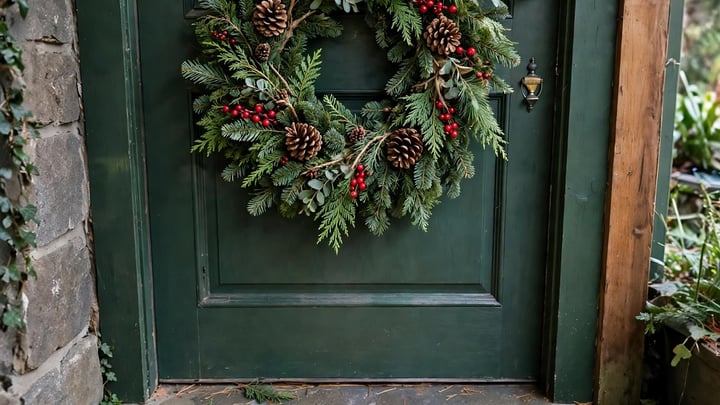
A fresh wreath is cut greenery, usually fir, cedar, pine, or a mix, wired onto a frame and decorated with berries, pinecones, or a bow. Its advantage is sensory and immediate. Real evergreen smells like pine the moment you open the door, and the texture is uneven in a way that looks alive rather than arranged. The needles catch light differently across the ring, and the whole thing feels like winter rather than a picture of winter.
That freshness has a limit. The Petal Boutique’s fresh versus artificial wreath guide puts a fresh wreath at about four to six weeks outdoors before it starts to dry out and drop needles, with hardier evergreens like noble fir and blue spruce lasting toward the longer end of that range. Cold and damp weather actually helps, because moisture slows drying, while a run of dry, mild days or direct afternoon sun shortens its life. A sheltered porch suits a fresh wreath well. A door that faces full afternoon sun does not.
Artificial Wreaths
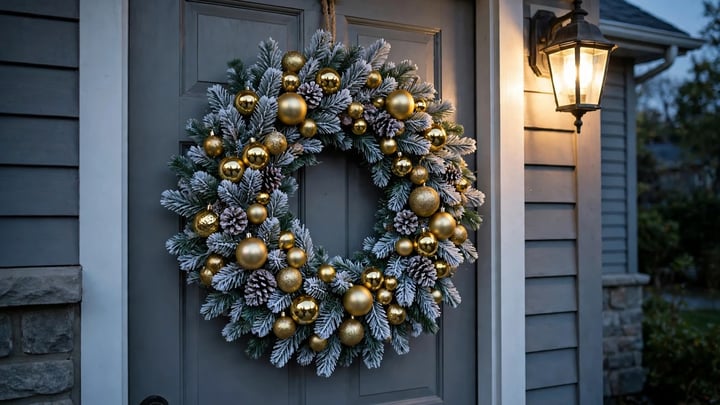
An artificial wreath is made from PVC or polyethylene foliage on a wire or plastic frame, often with built in berries, pinecones, or lights. Its advantage is consistency. It looks the same on day one and day thirty, it does not drop needles on the doormat, and a good one can be reused for several years if it is stored well. For a door that gets full sun, strong wind, or heavy rain, that consistency is hard to beat.
Quality varies more with artificial wreaths than with fresh ones, and the difference shows up in the tips. High density polyethylene tips look more lifelike than flat PVC, and a fuller wreath with branches that fan in several directions reads better from the street than a thin one with visible gaps. Southern Living’s wreath guide quotes holiday designer Christine Mango on this point, noting that artificial wreaths made from PVC or silk tend to outlast wreaths made from lower quality materials. Check the listing for whether the wreath is rated for outdoor use, and look for terms like fade resistant or UV resistant if your door gets sun for much of the day. Cheaper models can fade or turn brittle after a season or two in strong sun.
Dried and Preserved Wreaths

Dried wreaths use materials like dried orange slices, cinnamon sticks, dried flowers, seed pods, wheat, or preserved eucalyptus. They sit between fresh and artificial in character. They are real plant material, so they have texture and a natural look, but they do not need water and they do not drop needles. They last the season easily indoors, and they can work outdoors on a sheltered porch, though rain will shorten their life and fade their colour.
Which One Should You Choose?
Choose fresh if you love the scent and the look of real greenery, your door is sheltered, and you are happy to replace the wreath each year. Choose artificial if your door is exposed to sun or wind, you want the same wreath next year, or you have allergies to pollen and sap. Choose dried if you want a natural look with less mess than fresh, and your porch keeps the rain off. There is no wrong answer here, only a wrong match between material and doorway.
Prices vary widely by region, size, and material. A fresh wreath is a yearly purchase, while an artificial wreath spreads its price across the years you reuse it, so compare cost per season rather than the price on the tag alone.
Christmas Wreath Ideas by Style
Once size and material are settled, style is where the wreath starts to feel personal. The ideas below are starting points, not rules. Pick the one that fits your door colour and your house, then adjust the details rather than copying a photo exactly.
1. Classic Mixed Evergreen With Red Berries
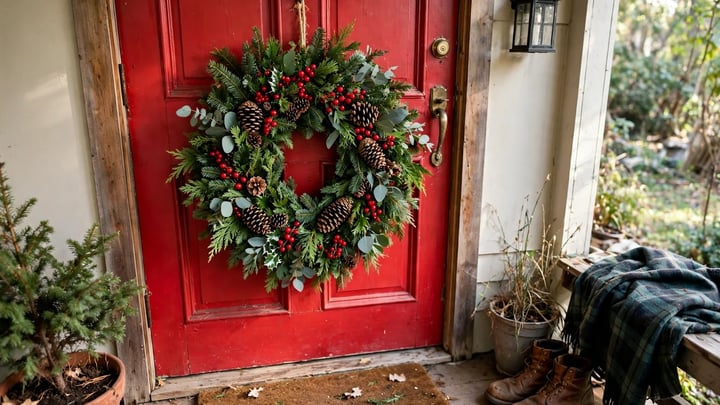
This is the wreath most people picture when they think of Christmas, and it earns its place. A full base of fir and cedar, with pinecones tucked in and clusters of red berries for contrast, looks right on almost any traditional house. The deep green reads well against white, cream, red, and dark painted doors, and the red berries give it a focal point from the street. Keep the decoration even around the ring, and let one element lead. If the berries are the star, keep the pinecones small. If the pinecones lead, use fewer berries. A wreath where every element shouts at once looks busy from ten feet away, even if it looks rich up close.
2. Magnolia Leaf Wreath
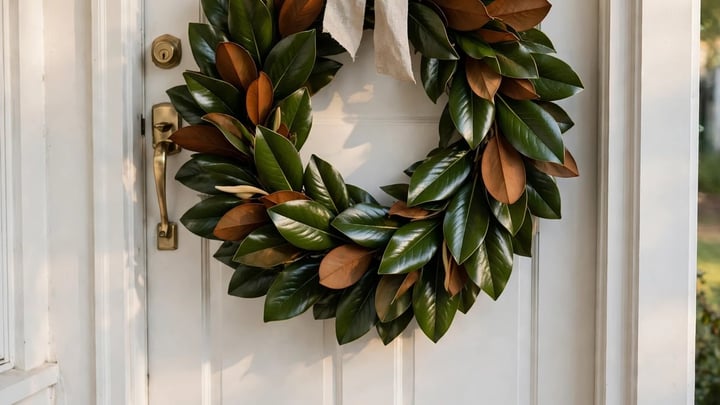
Magnolia leaves are broad, glossy, and two toned, dark green on top and soft brown underneath, so a magnolia wreath has a warm, layered look that evergreen alone cannot match. It suits a white or pale door, where the contrast is gentle rather than stark, and it works on a modern farmhouse or a Southern style home in particular. A plain magnolia wreath with a simple linen bow needs nothing else. Adding a few dried oranges or a sprig of berries is enough. Too much decoration hides the leaves, and the leaves are the point.
There is something calm about a magnolia wreath on a quiet December evening, when the porch light catches the gloss on the leaves and the rest of the street is dark. It does not try to be the brightest thing on the block. It just looks settled, like the house has been decorated with care rather than in a rush.
3. Slim Eucalyptus and Olive Wreath
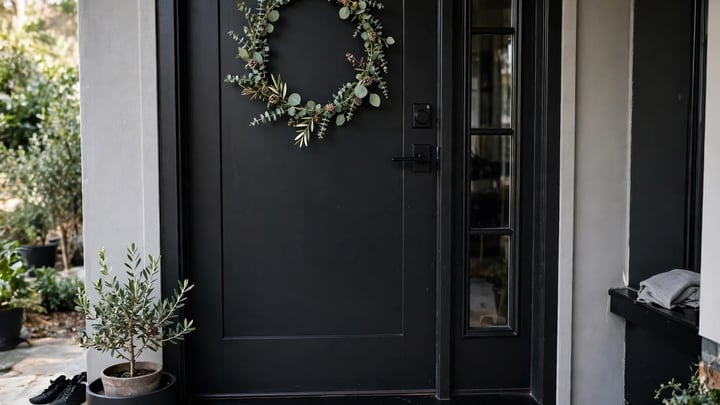
For a modern house, a slim wreath often beats a full one. Eucalyptus and olive branches make a pale green, airy ring that suits black, grey, and pale wood doors, and it leaves the door itself visible, which matters when the door is a design feature in its own right. This style works well on apartment doors and narrow doors, where a deep evergreen wreath would crowd the space. Hang it a little higher than a full wreath, so its lightness reads as deliberate, and pair it with a simple ribbon in a muted tone. A slim wreath with a loud red bow fights itself. Let the foliage carry it.
4. Modern Asymmetrical Wreath
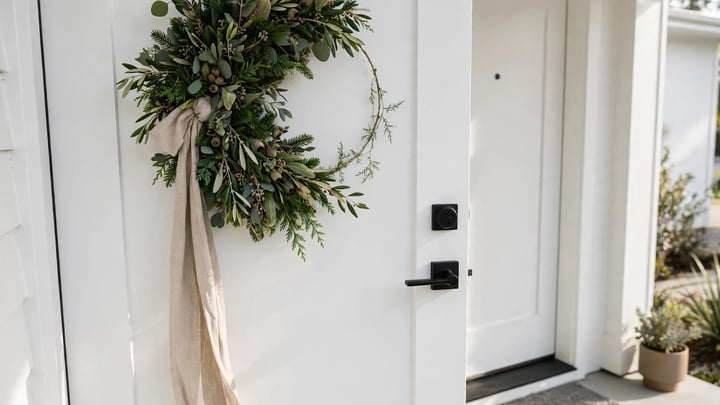
An asymmetrical wreath breaks the ring on purpose, with greenery clustered on one side and the rest of the frame left bare or nearly bare. It suits a contemporary house, a black door, and a porch with clean lines. The bare section is part of the design, so it needs a frame that looks good on its own, usually a slim metal or grapevine ring. This style is harder to get right than a full wreath, because every gap shows, and a sparse cluster can look unfinished rather than intentional. Buy one that is already arranged well, or keep the cluster full and let the empty side stay truly empty, with no stray sprigs drifting across it.
5. Oversized Statement Wreath

An oversized wreath, 30 inches (76 cm) or more across, works on a tall or wide door, a double height entry, or a house with a large porch that would swallow a standard size. It makes the door the centre of the whole front of the house, and it photographs well, which is part of why it shows up so often in seasonal photos. The practical side matters more than the photo. An oversized wreath is heavier, it catches more wind, and it needs a hanger rated for its weight, not just a hook that held last year’s smaller wreath. Hang it from a sturdy over door hanger or two fixing points, and check it after the first windy night. A statement wreath that ends up on the doormat makes the opposite statement to the one you wanted.
6. One Wreath on Each Double Door
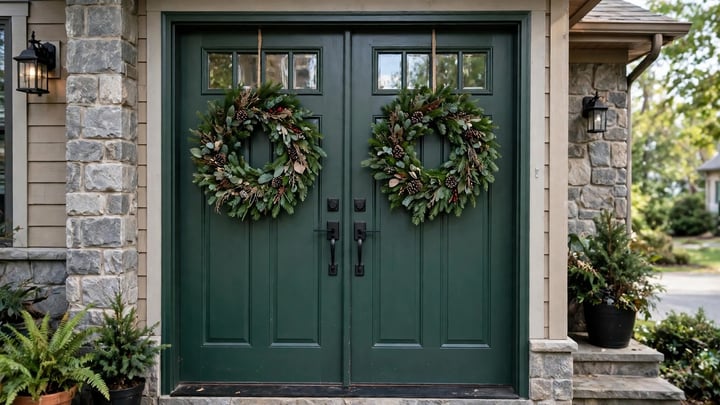
Double doors suit symmetry. Two identical wreaths, one on each door, give the entry a formal, balanced look that a single wreath cannot match. Match them exactly, same size, same style, same bow, and hang them at the same height. Even a small difference in height is visible from the street and will draw the eye for the wrong reason. If the doors are glass panelled, use slim wreaths that do not block the light, and hang them with suction hooks or magnetic hangers rated for the weight rather than an over door hanger that may not fit both doors.
Matching the Wreath to Your Door and House
Door colour is the fastest way to narrow the choice. A red door pairs well with deep green and gold, and it can carry red berries without the berries disappearing. A black door suits almost anything, though pale eucalyptus and frosted wreaths stand out best against it, while a dark evergreen wreath can blend into the door at night. A white door needs contrast, so a full green wreath with berries or a magnolia wreath with warm brown undersides works better than a pale, slim wreath that fades into the paint. A natural wood door suits rustic and dried styles, where the warm tones of pinecones and cinnamon sit comfortably against the grain.
Coming home on a cold December evening is when the choice shows itself. The porch light comes on, the wreath catches the warm light, and the smell of pine drifts in as the door opens. A wreath that fits the door makes that moment feel calm and welcoming, like the house was ready for you. A wreath that fights the door, too big, too pale, or too busy, makes the same moment feel slightly off, even if you cannot say why at first glance.
How to Hang a Wreath Without Damaging the Door

Nails and screws hold a wreath well, and they also leave a hole in the door that stays after Christmas. Most doors do not need that trade off. Four damage free methods cover almost every door type, and the right one depends on the door material and the weight of the wreath.
The simplest option is an over door hanger, a flat metal hook that slips over the top of the door, with a hook on the outside for the wreath. It holds heavy wreaths well, and it takes seconds to fit. Check that the door still closes and locks with the hanger in place, and choose a hanger with padding or a soft backing if your door is painted, so the metal does not scratch the finish. Over door hangers do not suit every door. On composite doors, a thick hanger can press on the weather seal, and the guide from Green Doors notes that risk, so check the seal after fitting and choose a slim hanger if the door is tight.
If you do not want anything hooked over the top of the door, an outdoor rated adhesive hook, such as a Command outdoor hook, sticks to smooth painted wood, metal, glass, and vinyl, and it comes off cleanly when you follow the removal instructions. Clean the surface first, let it dry, press the hook firmly in place, and wait for the curing time on the packet, usually at least an hour, before hanging the wreath. Check the weight rating on the packet and choose a hook rated above the weight of your wreath, since a large decorated wreath can weigh 10 pounds (4.5 kg) or more, according to decorating guides. Adhesive hooks do not suit rough or unpainted surfaces, and they can struggle in very cold weather, so they are best on a sheltered door.
Steel doors open up another option: a magnetic wreath hanger. Two strong magnets grip the door surface, one on each side, with a hook on the outside. No holes, no adhesive, and decorating guides commonly put a good magnetic hanger at 10 to 15 pounds (4.5 to 6.8 kg). Test it before you leave the wreath up overnight, and keep the magnet clear of the lock and any electronic doorbell wiring. If your door is wood, fibreglass, or aluminium, a magnet will not grip, so this method is door specific.
A ribbon loop is the most decorative method, and it works well for lighter wreaths. Loop a wide, sturdy ribbon through the back frame of the wreath, bring the ends up and over the top of the door, and secure them inside with a hook, or tie them to the inside handle if the handle sits in the right place. Wired ribbon holds its shape better than soft ribbon, and a wide ribbon spreads the weight so the wreath hangs level. The ribbon itself becomes part of the display from the inside, so choose a colour you are happy to see when you open the door.
Weather and Care
A front door wreath lives outside for weeks, so weather is part of the design, not an afterthought. Rain is the main test. Fresh evergreen handles rain well, and damp weather can even extend its life, though standing water in the bow or in dense clusters can lead to mould if the wreath never dries. Artificial wreaths handle rain too, as long as they are rated for outdoor use, though fabric bows and silk flowers will fade and sag when they get wet repeatedly. Dried wreaths are the most vulnerable to rain, and a sheltered porch is close to a requirement for them. After a wet week, a glance at the door as you come home tells you at once whether the wreath is still holding its shape.
Mistakes That Spoil a Good Wreath
A common mistake is buying the wreath before measuring the door. It is an easy mistake, because wreaths look smaller in a shop than they do on a door, and a 24 inch wreath in a garden centre aisle can look modest until it covers most of a 30 inch door. Measure the door width, check the storm door clearance, and use the cardboard test. The five minutes it takes will save a return trip and a wreath that never quite looks right.
Where this usually goes wrong is the bow. A bow that is too big, too stiff, or in a colour that fights the wreath can take over the whole display. A bow should be in proportion to the wreath, roughly a third of its width at most, and it should sit at the top or the bottom, not in the middle where it blocks the ring. If you are unsure, try the wreath without the bow first. Many wreaths look better plain than they do with a bow that was added because a bow felt expected.
Another mistake is hanging the wreath and then forgetting it. A fresh wreath needs a misting in dry weather, an artificial wreath needs a check after wind, and any wreath needs its hook checked after the first storm. A wreath that has slipped, faded, or dried out by Christmas week does not get better on its own. A short weekly check, when you come home and glance at the door, is enough. It is the kind of small habit that keeps the entry looking cared for rather than decorated once and left alone.
Conclusion
A Christmas wreath for the front door is a small decision with a large effect on how a house feels in December. Size it to the door, choose a material that suits your weather and your porch, match the style to the door colour and the house, and hang it in a way that does not damage the door. That is the whole job, and it is enough. You do not need the biggest wreath, the most decorated wreath, or the most expensive one. You need the one that looks like it belongs on your door, and that still looks good on Christmas morning.
Start with the door, not the shop. Measure it, look at its colour in daylight and at night, and think about how much sun and wind it gets. Then choose the wreath that fits those facts. When you step back to the street and the wreath reads as one clear, welcoming shape, with the door still visible around it, you have it right. Hang it, check it after the first windy night, and enjoy the way a simple ring of green changes the walk up to your own front door.
Planning the rest of your entry? See our guide to 30 Christmas decoration ideas for the full seasonal picture.
If the fireplace is part of your display too, our Christmas mantel decor ideas pair well with a front door wreath in the same colours.
For the whole front of the house, not just the door, try our outdoor Christmas decoration ideas next.
Prefer a quieter look? Our minimalist Christmas decor ideas show how a slim wreath fits a calmer scheme.
Carrying the same colours inside? Our Christmas table decoration ideas help tie the entry to the dining room.



Leave a Reply
You must be logged in to post a comment.