
A living room can look polished without a large budget. The difference between a room that looks expensive and one that looks thrown together is rarely the price of the furniture. It is the layout, the color palette, the lighting, and the editing. The tips below are ordered from free to low cost, so you can start with the ones that cost nothing and spend only where it shows.
Set a spending cap before you buy anything. A budget is not just a number; it is a decision about what matters most in the room. One strong rug or one good lamp beats five small decorations that add clutter. Work through the free tips first, then spend on the one or two changes that will make the biggest visible difference.
Key Takeaways
- The highest-impact changes cost nothing: rearrange the furniture, edit out clutter, and use what you already own in a new place.
- Paint is the cheapest way to transform a room, and a single accent wall costs less than replacing any piece of furniture.
- Spend on the things you touch and sit on, and save on decoration, which can come from thrift stores, prints, and objects you already own.
- A room looks expensive when it is edited: fewer pieces, each one intentional, with space to breathe around them.
18 Designer-Approved Tips to Decorate a Living Room on a Budget
1. Set a Spending Cap and a Priority List
Write down the total you are willing to spend, then list the changes you want in order of impact. Put the layout, paint, and rug at the top and small decorations at the bottom. A cap stops impulse buying, and a priority list stops you from spending the budget on a vase when the room needs a rug. If the list adds up to more than the cap, cut from the bottom, not the top.
2. Rearrange the Furniture for Free

A new layout costs nothing and changes the room more than any single purchase. Pull the sofa a few inches off the wall, angle a chair toward the conversation area, or swap the positions of two pieces. A common mistake is pushing every piece against the wall, which leaves a dead space in the middle and makes the room feel like a waiting area. Try floating the sofa with a console table behind it, or grouping chairs around the coffee table instead of lining them up along the walls.
3. Paint One Wall Instead of the Whole Room

Paint is the cheapest transformation in decorating. A single accent wall behind the sofa or the TV costs one sample pot or one gallon and changes the whole mood of the room. Choose a color that already appears in your rug or cushions so the wall ties the room together instead of fighting it. A gallon of paint typically covers about 350 to 400 square feet per coat on a smooth wall, so one gallon is usually enough for an accent wall with a second coat.
4. Swap Pillow Covers, Not the Pillows

New throw pillows are expensive, but covers are not. Keep the inserts you already own and buy covers in a tighter palette: two solid colors and one pattern, for example. A common mistake is buying pillows in every color in the room, which makes the sofa look busy. Two or three covers in colors pulled from the rug or the art will make the same sofa look new. Washable covers are the practical choice for a room that gets daily use.
5. Shop Your Own Home First
Before buying anything, walk through the other rooms and look for pieces that would work better in the living room. A lamp from the bedroom, a basket from the bathroom, a side table from the hallway, or a piece of art from a spare room can all move. Objects look different in a new spot, and moving them costs nothing. The same goes for books: a stack of books from a shelf makes a coffee table vignette without a purchase.
6. Buy Secondhand Before Buying New

Thrift stores, estate sales, and online marketplaces are the best source of solid wood furniture, lamps, mirrors, and art at a fraction of retail. Look for structure, not surface: a sturdy wood frame with a scratched finish is a better buy than a new piece made of particleboard. Check secondhand sofas carefully for smell and frame condition, and pass on anything with a sagging seat or a wobbly frame. A thrifted side table or bookshelf is low risk; a thrifted sofa needs a closer look.
7. Choose One Statement Piece and Save Everywhere Else
A room needs one thing worth looking at. It can be a large mirror, a bold piece of art, a sculptural lamp, or a distinctive chair. Spend the largest share of the budget there and keep everything else simple. A common mistake is spreading the budget evenly across ten small items, which leaves the room with nothing to focus on. One strong piece plus quiet supporting furniture reads as intentional; ten average pieces read as clutter.
8. Layer the Lighting With Cheap Lamps and Warm Bulbs
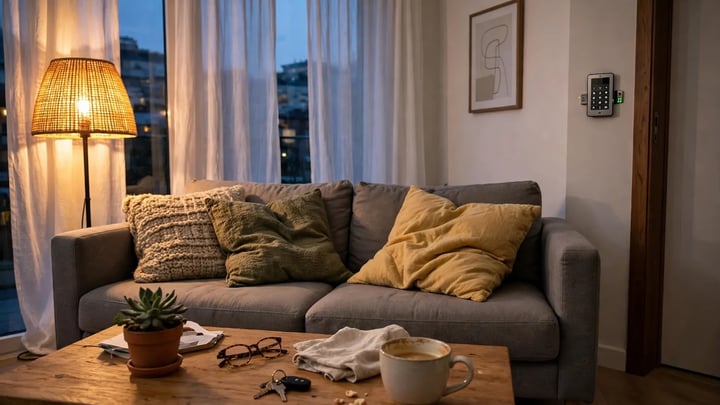
Overhead light alone makes a living room feel flat. Add two or three lamps at different heights: a floor lamp beside the sofa, a table lamp on a side table, and a small lamp on a shelf. Thrifted lamp bases with new shades are one of the best budget buys in decorating. Use warm bulbs in the 2700K to 3000K range for living rooms, which is the warm white most people find comfortable in the evening. A dimmer switch on a floor lamp costs little and changes the mood of the whole room after dark.
9. Get the Rug Size Right Before You Buy
The wrong rug size ruins an otherwise good room, and the right one costs the same money. A rug should be large enough for at least the front legs of the sofa and chairs to sit on it. In most living rooms that means an 8 by 10 foot rug for a standard three-seat sofa, or 9 by 12 in a larger room. A rug that is too small makes the furniture look like it is floating on a mat. If a large rug is out of reach, a flat-weave or jute rug in the right size usually costs less than a thick pile rug and still anchors the seating area.
10. Add Plants for Life and Color
Plants are the cheapest way to add color, texture, and life to a living room. A large floor plant in a corner fills an empty spot that would otherwise need furniture. Small plants on shelves and side tables add green at eye level. If you do not have good light or a watering habit, a few convincing faux plants in the right spots work, but keep them dusted; a dusty faux plant looks worse than no plant. For real plants, start with forgiving types such as snake plants and pothos, which tolerate irregular watering.
11. Hang Curtains High and Wide
Curtains hung at the wrong height make a room feel smaller. Mount the rod 4 to 6 inches above the window frame, and extend it 6 to 12 inches beyond the frame on each side so the curtains stack on the wall instead of covering the glass. This makes the window look larger and lets in more light. Floor-length curtains that just touch the floor look more finished than short ones. Budget curtain panels in a solid linen-look fabric cost far less than custom drapes and look better than cheap patterned ones.
12. Build a Gallery Wall With Affordable Prints

A gallery wall is one of the best budget art solutions because the frames matter more than the art. Buy simple matching frames in one color, then fill them with affordable prints, pages from old books, or your own photos. Keep the spacing even, about 2 to 3 inches between frames, and lay the arrangement out on the floor before hanging anything. A common mistake is hanging frames too high; the center of the arrangement should sit near eye level, around 57 to 60 inches from the floor.
13. Use a Mirror to Bounce Light and Add Space
A large mirror opposite or beside a window doubles the light in a room and makes a small living room feel larger. Thrifted mirrors with wood or brass frames are easy to find and easy to clean up. Hang the mirror where it reflects something worth seeing, such as a window, a plant, or a piece of art, not a blank wall or the TV. A mirror leaning on a console or a mantel works too, as long as it is secured so it cannot slip.
14. Slipcover or Re-cover Instead of Replacing the Sofa
A sofa in good structural shape with tired fabric does not need replacing. A well-fitted slipcover costs a fraction of a new sofa and changes the color of the largest piece in the room. Choose a washable fabric in a solid neutral so the sofa works with any cushions or rug you add later. If the sofa frame is solid but the cushions are flat, new foam inserts or a layer of batting inside the cushion covers can restore the shape without a new purchase.
15. Style Vignettes With Objects You Already Own
A vignette is a small grouping of objects on a coffee table, shelf, or console, and it is free to make. Group three or five objects of different heights: a stack of books, a small plant, and a candle, for example. Odd numbers look more natural than even ones. Keep each surface to one vignette instead of covering it with small items. A common mistake is filling every surface; a room with breathing room around each object looks calmer and more expensive than a room where every surface is crowded.
16. DIY One Simple Project
One handmade piece gives a room personality that store-bought decor cannot. Paint a thrifted frame, wrap a plain vase in twine, sew simple cushion covers, or stain a wooden crate to use as a side table. Pick a project you can finish in an afternoon with tools you already own. A common mistake is starting a project that needs skills or tools you do not have, which ends half finished in a closet. One finished, simple project beats three ambitious ones that never get done.
17. Use Remnants and Samples for Small Touches
Remnant fabric, leftover paint, and sample-size items cover the small touches without full prices. A remnant of fabric becomes a table runner or a cushion cover. A sample pot of paint refreshes a side table or a picture frame. Flooring and tile shops sometimes sell offcuts and samples cheaply, and a single large tile can become a tray or a plant stand. Ask at local shops; remnants are often sold at a steep discount because the shop wants them gone.
18. Edit Ruthlessly, Then Stop
The last tip costs nothing and matters most: remove one thing from every surface, then step back and look. A living room looks expensive when each piece has room to breathe. If a decoration does not earn its place by being useful or beautiful, move it to another room or store it. A common mistake is adding more decor to fix a room that actually has too much. Editing is the final step, not an afterthought, and a room that is finished is one where nothing else needs to be added.
How to Spend a Small Budget in the Right Order
If you have a small budget and a long list, spend in this order: layout first (free), paint second (cheapest big change), rug third (anchors the room), lighting fourth (changes the mood), and decoration last (fills the gaps). This order puts money where it shows most. Buying decoration before the rug or the lighting is a common mistake, because small objects cannot fix a room whose bones are wrong.
A second rule: buy the best version of the thing you use most. If the family sits on the sofa every evening, a good slipcover or a solid secondhand sofa matters more than new art. If the room is mainly for guests, the rug and the lighting matter more. The budget goes further when it follows how the room is actually used.
Frequently Asked Questions
How much does it cost to decorate a living room on a budget?
It depends on what you already own. A room can change a lot for the price of a gallon of paint and a few pillow covers if the furniture is sound. A full refresh with a rug, lighting, and secondhand furniture costs more, but buying secondhand and doing the layout and styling yourself keeps the total far below retail. Set a cap first, spend on the rug and lighting, and save on decoration.
What is the cheapest way to make a living room look expensive?
Edit the room, fix the layout, and get the rug size right. Those three changes cost little or nothing and have the biggest visual effect. After that, warm lighting, a tight color palette, and one statement piece do the rest. Small decorations are the last step, not the first.
Should I buy new furniture or secondhand for a budget living room?
Buy secondhand for solid wood pieces, lamps, mirrors, and art, where quality is easy to judge. Buy new for anything with a mechanism or a cushion that wears out, such as a recliner or a mattress, unless you can test it thoroughly. A secondhand sofa is worth it only if the frame is solid, the seat does not sag, and it smells clean.
Conclusion
Decorating a living room on a budget is a matter of order: layout first, paint second, rug and lighting third, decoration last. The free changes matter most, and the money goes furthest on the few pieces that anchor the room. Edit hard, keep the palette tight, and stop when the room feels finished.




Leave a Reply
You must be logged in to post a comment.