
A living room only needs a handful of furniture pieces to work well. Get those right and the room handles everyday relaxing, conversation, and guests without feeling crowded or unfinished. Get them wrong and no amount of decor fixes the result. This guide covers the eight pieces that earn their floor space in a modern living room, how to size each one, what order to buy them in, and which pieces you can safely skip for now.
What “Modern” Means in Living Room Furniture
Modern living room furniture is defined by clean lines, simple shapes, and a low, horizontal profile. Legs tend to be slim and visible, arms are straight or gently sloped rather than rolled, and ornament is kept to a minimum. The look comes from proportion and material rather than decoration.
Common modern materials include light oak and walnut, matte black metal, leather, performance fabric, bouclé, and glass. A modern room usually mixes two or three of these rather than matching everything. A walnut coffee table with a fabric sofa and a black metal floor lamp reads as modern because the materials contrast while the shapes stay simple.
Modern is not the same as contemporary, though the two words get swapped constantly. Modern refers to a specific design movement with roots in the early to mid 20th century: function first, clean geometry, honest materials. Contemporary simply means what is current right now, and it borrows from many styles. For furniture shopping, the distinction matters less than the checklist that follows. If a piece has a simple silhouette, a restrained finish, and a clear job to do, it fits a modern room.
The 8 Essential Pieces
Every living room uses its furniture for the same four jobs: seating people, holding drinks and objects within reach, storing what the household owns, and shaping light and layout. The eight pieces below cover those jobs. Anything beyond them is optional, and that is useful to know before spending money on a room that already works.
1. The Sofa or Sectional

The sofa is the first purchase and the anchor for everything else. It sets the scale of the room, the direction people face, and the color starting point for the rest of the furniture. Buy it first and size every other piece relative to it.
A standard three seat sofa usually measures about 71 to 86 inches wide, with 84 inches a common size. A loveseat runs about 48 to 72 inches wide, and an apartment sofa about 68 to 78 inches. Those are the sizes most often listed by major furniture retailers, and they are a reliable starting point when measuring a wall or a seating area. Seat depth typically falls in the range of 20 to 24 inches, and seat height around 17 to 19 inches, though both vary by design and should be checked on the specific piece.
Choose between a sofa and a sectional based on how the room is actually used. A straight sofa suits rooms where seating faces a fireplace, where the layout may change, or where a walkway has to pass behind the seating. It is also easier to move and easier to rearrange. A sectional suits a household that watches television together or wants to make full use of a corner. The trade off is flexibility. A large sectional locks the layout in place, and it can crowd a room that also needs a walkway to another space.
Upholstery deserves as much attention as size. Households with children or pets do better with performance fabric or leather, which handle routine cleaning and daily wear more forgivingly than a light linen weave. A household that rarely eats in the living room has more freedom to choose a textured fabric like bouclé. Before buying, check the frame construction, the cushion fill, and the care instructions. A sofa is the most used piece in the room, so comfort and durability matter more here than on any other purchase.
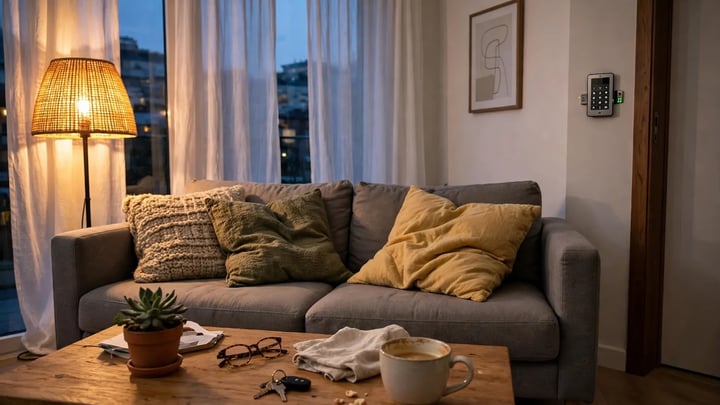
Think about how the sofa will feel at the end of a long day. You sink into the cushions, your shoulders drop, and the fabric feels soft against your arms. A seat that is too firm leaves you shifting instead of settling in. Comfort is what makes this the place you return to every night.
Before ordering a sofa, check the size against your room with our guide to how to choose the right sofa size.
2. The Coffee Table

The coffee table is the shared surface at the center of the seating area. It holds drinks, remotes, books, and board games, and it visually ties the seating group together. A room without one feels unfinished. A room with an oversized one feels cramped.
A widely used sizing guideline is to choose a table about two thirds the length of the sofa. An 84 inch sofa pairs with a table around 56 inches long. Leave roughly 14 to 18 inches between the sofa and the table, enough to reach a drink without stretching and enough to walk around it without turning sideways. The table top should sit about the same height as the sofa seat, or an inch or two lower, so it feels convenient rather than like a barrier.
Shape matters as much as size. A rectangular table suits a long sofa and a rectangular room. A round or oval table softens a room full of straight lines and works well in tighter spaces, since it has no corners to catch a shin. Households with small children often prefer rounded edges for the same reason. Storage is worth considering too. A table with a lower shelf or drawers holds remotes, games, and magazines that would otherwise pile up on the surface.
A coffee table gets touched more than almost anything else in the room. In the morning you set a warm mug down and feel the steam rise while the wood is smooth and cool under your hand. In the evening it holds a book and a glass within easy reach. That easy reach is what makes a seating area feel relaxed instead of staged.
The coffee table does not have to match the sofa or come from the same collection. A wood table brings warmth to upholstered seating, while glass or metal suits a more spare arrangement. Coordinating finishes and proportions create a unified look without requiring every piece to match exactly.
3. Accent Chairs

One or two accent chairs complete a seating area. They give guests a place to sit, create a reading spot near a window, and let the room flex when more people arrive. A living room with only a sofa is functional, but it feels assembled rather than designed.
Place a chair beside the sofa and angle it slightly toward the center of the room, or use a pair of chairs opposite the sofa to form a conversation group. The chair should be noticeably smaller in visual weight than the sofa, or the room starts to look like a furniture showroom. An open frame or slim legs keep a compact room feeling open, while a bulky, high back chair can close it in.
Accent chairs also carry the room’s personality. This is the piece where a bolder color or a stronger pattern makes sense, because one chair is easy to change later and does not commit the whole room. A leather sling chair, a bouclé swivel chair, or a simple wooden frame chair with a cushion can each anchor a modern look. Comfort still counts. A chair nobody wants to sit in is decoration, and decoration is not the job this piece is hired for.
Think about the chair you would choose on a quiet morning. Sunlight falls across the seat, the fabric feels soft, and you can sit with a book for a while without noticing the time. A chair that invites you to stay earns its place. A chair that looks good and feels stiff will stay empty, no matter how well it matches the room.
Recliners belong in this category too, when comfort is the priority. A recliner suits a room built around television and long evenings, but check the clearance it needs to recline fully. A chair that looks compact upright may need extra space behind it, and that space has to come from somewhere in the layout.
4. The Media Console

If the room has a television, it needs a media console, a TV stand, or a wall mount with storage nearby. The console holds the screen at a comfortable height, hides cables and devices, and keeps remotes, game systems, and streaming boxes in one place.
Size the console to the television, not to the wall. The stand should be wider than the TV, not narrower. A 65 inch television on a 40 inch stand looks precarious and out of proportion, and it leaves no room for devices on either side. A console a few inches wider than the screen on each side looks settled and gives the setup room to breathe.
Height matters as well. The center of the screen should sit close to eye level for a seated viewer, which usually means a low console rather than a tall one. Storage needs decide between open and closed. Open shelves suit equipment that needs ventilation or an unobstructed signal. Closed cabinets hide controllers, cables, and accessories and reduce visual clutter. Either way, plan the cable routing before the console goes against the wall, and keep outlets accessible.
A room without a television does not need a media console at all. In that case a low cabinet or a console table against the wall does the same storage job without dedicating a large piece to a screen that does not exist.
5. Side Tables
Side tables are small, cheap relative to the sofa, and easy to skip. Skipping them is a mistake. Without a surface beside each seat, drinks end up on the coffee table, books pile on the sofa arm, and phones slide onto the floor. A side table gives every seated person a place within reach.
A practical guideline is one side table per sofa end, or one per seated person in a larger arrangement. The height should sit close to the sofa arm, typically in the range of 24 to 28 inches, so a drink or a book lands at a natural height. A table much lower than the arm forces an awkward reach. A table much higher looks like a pedestal.
Side tables also hold lamps, which makes them part of the room’s lighting plan rather than just a surface. A round table suits a tight corner. A C shaped table slides under a sofa arm and works well beside a reading chair. In a modern room, a slim metal frame with a wood or stone top keeps the piece light visually, which matters when several small tables share the room with larger furniture.
6. The Area Rug

The rug defines the seating area. It groups the sofa, chairs, and coffee table into one zone, softens hard flooring, and improves the acoustics of a room that would otherwise echo. A rug that is too small makes even good furniture look scattered, and it is one of the most common sizing errors in living rooms.
A standard seating group usually needs an 8 by 10 foot rug, and a larger group needs a 9 by 12 foot rug. The front legs of the sofa and chairs should sit on the rug, with the coffee table fully on it. That single rule fixes most rug mistakes. A rug that only fits under the coffee table floats in the middle of the floor and divides the room instead of uniting it.
Color and pattern should be chosen after the sofa, not before. A neutral rug in wool or a wool blend suits a room where the sofa carries the color. A patterned rug works when the seating is plain and the room needs visual interest at floor level. Low pile suits high traffic. Higher pile feels softer underfoot but shows traffic paths sooner.
Your feet will tell you whether the rug works before your eyes do. On a cold morning, stepping onto soft wool instead of bare hard floor makes the whole room feel warmer. The rug also quiets the room. Footsteps soften, voices lose their echo, and the seating area feels snug and settled.
7. Storage That Earns Its Floor Space
Books, blankets, board games, toys, and electronics all need a home. Without designated storage, those items accumulate on tables and sofas, and the room feels cluttered even when the furniture is well chosen. Storage earns its floor space by keeping everyday objects out of sight or neatly displayed.
A bookcase suits a household that wants to display books, framed photos, and objects alongside storage. Measure the wall first, and think about what will actually sit on the shelves. Large books, baskets, and board games need different shelf heights than small decorative objects. A tall bookcase uses vertical space well, while a shorter unit fits beneath a window or beside a television. Anchor tall bookcases to the wall, especially in a home with small children, and follow the manufacturer’s installation instructions.
A closed cabinet or credenza suits a household that wants clutter hidden. Controllers, chargers, games, and throws go behind doors, and the top surface stays clear for a lamp or a vase. A storage ottoman does double duty in a small room, holding blankets inside while serving as a footrest or extra seat. Choose storage based on what the household actually owns rather than buying a large unit because a wall happens to be empty.
If the room feels crowded after furnishing, our small living room ideas offer space saving tricks that work with the furniture you already have.
8. Lighting: Floor and Table Lamps
Overhead lighting alone makes a living room feel flat and harsh. Floor lamps and table lamps create the layered light that makes a room comfortable in the evening. They also mark the edges of the seating area and make the furniture arrangement feel intentional.
A floor lamp behind or beside the sofa end gives reading light without a ceiling fixture. An arc lamp over a seating group suits a larger room and replaces a side table lamp when floor space is tight. Table lamps on side tables add light at seated eye level and warm up the corners of the room. Warm white light, roughly 2700 to 3000K, suits relaxing in the evening.
Lamp shades matter too. A drum shade spreads light evenly and suits a modern room. A linen shade softens the light and adds texture. The lamp base should echo another material in the room, black metal, wood, or ceramic, rather than introducing a new finish that competes with the furniture.
When the lamps come on in the evening, the room should change its mood. The harsh overhead light fades, the corners glow warm, and the sofa feels like the calmest place in the house. That soft light helps you wind down. It turns a tidy room into a room you actually want to spend time in.
Getting the Proportions Right
Each piece has its own sizing rule, but the rules work together. The sofa sets the scale. The coffee table follows the sofa. The rug follows the seating group. The console follows the television. The side tables follow the sofa arm. When those relationships hold, the room looks considered even before any decor is added.
| Piece | Sizing rule to use as a starting point |
|---|---|
| Sofa | Standard three seater about 71 to 86 inches wide; leave 30 to 36 inches of walkway on the main access side |
| Coffee table | About two thirds the sofa length; 14 to 18 inches from the sofa; top near seat height |
| Accent chair | Smaller in visual weight than the sofa; facing seats about 3 to 10 feet apart for conversation |
| Media console | Wider than the television; low enough that the screen center sits near seated eye level |
| Side table | Height close to the sofa arm, typically 24 to 28 inches |
| Area rug | 8 by 10 feet for a standard group, 9 by 12 feet for a larger group; front legs on the rug |
Measure the room before buying anything, and measure the delivery route as well. Doorways, hallways, and staircases decide whether a sofa actually reaches the living room.
What Order to Buy the Pieces In
Furnishing a room in stages beats buying everything at once. The order matters because each piece is sized relative to the one before it.
- The sofa or sectional. Everything else is sized and styled relative to it.
- The coffee table. Sized to the sofa, it sets the center of the seating group.
- The media console. Sized to the television, it fixes where the sofa faces.
- Accent chairs. Once the sofa and television positions are set, the remaining seating spots are obvious.
- Side tables. Chosen to match the sofa arm height and the lamp plan.
- The area rug. Easier to size once the furniture is in place, and it should cover the front legs of the seating.
- Storage. Chosen for what the household actually owns once the room is in use.
- Lighting. Floor and table lamps last, because their positions depend on where the seating and tables ended up.
Buying in this order also spreads the cost. A room furnished in stages over a few months looks better than a room furnished in one weekend from a single store, because each decision is made with the real room in front of it rather than from a showroom floor.
Adapting the List to Your Room Size
A small living room uses the same eight pieces, but in smaller and more flexible forms. A loveseat or an apartment sofa replaces a full three seater. One accent chair replaces two. A round coffee table replaces a rectangular one. A storage ottoman replaces a separate footrest and a blanket basket. Nesting side tables tuck away when not needed. The goal is the same four jobs, done with fewer and lighter pieces.
A large living room has the opposite problem. The pieces are the same, but the room needs more of them or larger versions to avoid feeling empty. A sectional replaces a straight sofa. Two accent chairs replace one. A second seating group, perhaps two chairs and a small table near a window, gives a large room a second use. A larger rug, 9 by 12 feet or more, keeps the main group grounded. Empty floor space is not a problem to fill.
Open plan rooms need one more consideration. Without walls to define the living area, the rug and the back of the sofa do the defining. A console table behind a floating sofa marks the boundary with the dining or kitchen space.
Modern Materials and Colors That Age Well
Modern furniture looks best when the material palette stays small. Two or three materials, repeated across the room, create coherence. A common combination is warm wood, a neutral fabric, and matte black metal. Another is leather, light oak, and glass. The repetition is what makes the room feel designed rather than collected at random.
For upholstery, neutral colors age best on the largest piece. A sofa in warm gray, greige, oatmeal, or charcoal works with almost any accent color and survives a change of cushions or curtains. Color belongs on the pieces that are easy to change: accent chairs, cushions, throws, and art. A navy or forest green accent chair is a confident choice. The same color on a full sofa is a commitment that gets harder to live with over time.
A neutral sofa may sound plain on paper, but it feels different in real light. Morning sun warms the oatmeal fabric, evening lamplight softens the gray, and a wool throw draped over the arm adds a texture you want to touch. A new cushion can change the mood without changing the furniture.
Wood finishes should stay consistent in tone, though they do not need to match exactly. A walnut coffee table and a light oak media console can share a room if both tones are warm. Metal finishes follow the same logic. Matte black is the most forgiving modern choice, and it pairs with almost any wood.
Pieces You Can Skip for Now
Not every piece in a furniture store belongs in a living room. A few common purchases can wait until the eight essentials are in place.
A second coffee table or a large decorative trunk adds surface but no new function. A display cabinet for objects nobody looks at takes wall space a bookcase could use better. A full set of matching furniture, sofa, loveseat, chair, and tables all from one collection, saves decision time but often looks flat. Mixing pieces with shared proportions and complementary materials usually produces a better room. Wall art, plants, cushions, and throws are not furniture, and they should come after the furniture, since they are far cheaper to change than a sofa and are easy to adjust once the big pieces are in place.
Common Mistakes to Avoid
A common mistake is buying the sofa before measuring the room. A sofa that spans the entire wall leaves no room for side tables or lamps, and it makes the wall look smaller rather than the seating look generous. Leave at least a foot of breathing room on each side when the sofa sits against a wall.
A common mistake is choosing a rug that is too small. A rug that only fits under the coffee table divides the seating group instead of uniting it. When in doubt, size up, not down.
Where this usually goes wrong is pushing every piece against the walls. Floating the sofa even a few inches from the wall, with a narrow console behind it, makes a room feel larger and more deliberate. In a small room a few inches of space behind a sofa still changes the feel of the whole arrangement.
The trap here is matching everything. A room where the sofa, chairs, tables, and console all share one finish and one fabric looks like a showroom set, not a home. Shared proportions and two or three repeated materials create unity without uniformity.
Skip the delivery check and a piece that cannot reach the room becomes the most expensive kind of sizing error. Measure doorways, hallways, and stair turns before ordering a sectional or a large console.
Conclusion
A modern living room needs eight pieces: a sofa or sectional, a coffee table, accent chairs, a media console, side tables, an area rug, storage, and layered lighting. Buy them in that order, size each one relative to the piece before it, and let the room’s real use decide the details. The rest, art, plants, cushions, and decor, can wait until the furniture earns its place.
Still deciding between a matched set and individual pieces? Our guide to modern living room sets compares the set approach with buying piece by piece.
Once the furniture is chosen, our small living room layout ideas show ten arrangements that put the pieces in the right places.
For a calmer, pared back version of this list, see our minimalist living room decor ideas for a clutter free take on the same room.
Choosing a rug color after the sofa? Our living room paint colors guide helps coordinate wall color with the furniture palette.
Furnishing on a tight budget? Our guide to decorating a living room on a budget shows where to spend and where to save on these same pieces.
Adding greenery once the furniture is placed? Our indoor plants guide covers which plants suit living room light and how to keep them alive.





Leave a Reply
You must be logged in to post a comment.