
A small garden does not need to feel like a compromise. A 10 by 10 ft yard, a narrow side strip, or a sunny patio can hold seating, planting, and a place to eat outside, as long as every square foot has a job. The gardens that feel generous are rarely the ones with the most plants. They are the ones where the layout is decided before anything is bought, the planting goes up as well as out, and nothing sits in the garden without earning its place.
The 20 ideas below work for yards, patios, and balconies. They are ordered the way a real project runs: measure and map first, set the layout, then plant and furnish. Start with one or two ideas from the top of the list. A small garden improves faster from one bed done well than from ten half finished projects.
Key Takeaways
- Map the sun and sketch the plot to scale before buying plants or furniture. A garden planned on paper costs nothing to change.
- Two zones beat five in a small space. One zone for sitting and eating, one for planting, and a clear path between them is enough.
- Go vertical. Trellises, pocket planters, and climbers add planting area without taking a single square foot of ground.
- Use fewer, larger containers and fewer plant types. A small garden looks bigger when the palette is short and the pots are not competing with each other.
- Pick plants for the sun the garden actually gets, not the sun the plant tag promises. Six or more hours of direct sun is full sun; less than that needs shade tolerant planting.
Start with the sun and a sketch, not a shopping cart
Walk the garden at three times of day before spending anything: morning, midday, and late afternoon. Note where the sun falls, where the shade sits, and where water pools after rain. A spot that looks sunny at noon can sit in shade by 3 pm once the house and the fence are factored in. Most vegetables and flowering plants need six or more hours of direct sun a day, which gardeners call full sun. Herbs such as mint, parsley, and chives tolerate less. Planting a tomato in a spot that gets three hours of sun is not a plant problem. It is a placement problem, and it is fixed on paper before it costs money.
Draw the plot on graph paper with one square equal to one foot, mark north, and block in the sunny and shady areas. Then sketch two or three layout options over the top before committing to one. A garden designer working on small plots uses the same method, often at a scale of 1:50, because a layout that looks fine in the head usually shows its flaws on paper: a path that dead ends, a bed no one can reach, or seating squeezed against a fence. The sketch also stops the most common small garden mistake, which is buying plants first and finding places for them later.
20 small garden ideas for maximum impact
1. Map the sun before buying anything
Spend one weekend watching the light. Mark the sunniest patch, the shadiest corner, and the strip that gets morning sun only. Put food and flowers in the sunniest patch, and put shade tolerant plants, storage, and seating in the shade. A simple way to test a spot is to check it every two hours for a day and count the hours of direct sun. Six or more hours means full sun planting. Three to six hours means partial sun. Under three hours means shade planting, or no planting at all in that spot. This one habit saves more money than any sale on plants, because the right plant in the wrong light never catches up.
2. Sketch the plot to scale on graph paper
Measure the length and width of the garden, then draw it with one square equal to one foot. Add the house wall, the fence, the door, the tap, and any tree that casts shade. Then draw the seating, the beds, and the path as rectangles on the sketch. A typical mistake shows up at this stage: the plan fits two chairs, a table, three beds, and a path into a 10 by 12 ft yard on paper, but only because the path was drawn 18 inches wide. Draw the path at its real width, draw the chairs with space to pull them out, and the plan either fits or it does not. Changing a line on paper is free. Moving a raised bed is not.
3. Split the garden into two zones, not five
A small garden feels larger when it has two clear zones: one for sitting and eating, and one for planting. A third zone only works if the garden is big enough to hold it without crowding, which most small plots are not. Use a change of surface to mark the split, such as decking or paving for the seating zone and soil or gravel for the planting zone, or use a low planter as the divider. Keep the sightline open across both zones so the eye travels the full length of the garden. A common mistake is to divide a tiny garden into a dining area, a lounge area, a vegetable patch, a flower bed, and a play corner. Each zone ends up too small to use, and the garden reads as clutter instead of design.
4. Build one wide path instead of several skinny ones

One wide path beats three narrow ones in a small garden. Narrow paths under about 31 inches (80 cm) wide make a garden feel rushed and cramped, because there is no room to walk comfortably or to carry a watering can. A single path of 36 inches or more, gently curved or run on the diagonal, gives the garden structure and makes it feel wider than it is. Curve the path slightly rather than running it straight down the middle: a straight path turns a narrow garden into a hallway, while a curve hides the far end for a few steps and adds a sense of depth. Edge the path with brick or pavers so the planting beds stay tidy and the path stays clear of soil after rain.
5. Grow up the fence with a trellis and climbers
A fence or a bare wall is unused planting space. Fix a trellis to it and grow climbers such as clematis, star jasmine, or climbing beans, and the boundary stops looking like a wall and starts looking like part of the garden. Vertical planting is the single most effective way to add greenery without losing floor space, and it draws the eye upward, which makes the garden feel taller and less boxed in. Keep the trellis a few inches off the wall so air can move behind it and the wood can dry after rain. A common mistake is to plant a vigorous climber in a small space with no plan for pruning it. Check the mature size on the label, and pick a climber that fits the fence it will cover.
6. Hang a pocket planter wall for herbs and salad

Felt pocket planters hang flat against a wall or fence and hold dozens of small plants in almost no floor space. They work best for shallow rooted plants such as lettuce, strawberries, and herbs. Installation takes a few screws or hooks, and a small system costs roughly 20 to 100 dollars depending on size. The catch is water: fabric pockets dry out faster than pots on the ground, so they need checking more often in hot weather, and a drip line down the center of the wall saves daily hand watering. Also check the weight before loading a wall. Wet soil weighs roughly 75 pounds per cubic foot, so a fully planted wall is heavier than it looks, and the fixings need to be anchored into something solid, not just the fence boards. A small version, one pocket panel with mint or basil by the kitchen door, teaches the routine before a whole wall is planted.
7. Use fewer, bigger containers instead of many tiny pots
A dozen small pots scattered around a patio reads as clutter. Three large containers read as design. Large pots also hold more soil, which means they dry out slower, need watering less often, and give roots room to grow. A good starting set is three containers of different heights in the same material or color, grouped near the seating area. For vegetables, a 5 gallon bucket with drainage holes drilled in the bottom grows a dwarf tomato or a pepper plant, and an old wooden crate grows herbs or strawberries for free. The rule for containers is simple: drainage holes are not optional. A pot without drainage drowns the roots after the first heavy rain, and no plant recovers from that.
8. Cluster pots in odd numbers at different heights

Group pots in threes or fives, with one tall plant, one mid height plant, and one trailing plant spilling over the edge. Odd numbered groups look intentional where even pairs look like a row of soldiers. Vary the heights with a small plant stand, an upturned crate, or a stack of pavers, so the group reads as one arrangement instead of a line of pots on the ground. Keep the plants in a cluster on the same watering schedule, meaning similar sun and water needs in one group, so one plant is not drowning while its neighbor dries out. A cluster by the door, a cluster by the seating, and the rest of the patio left clear does more for the garden than pots spread evenly along every edge.
9. Plant one dwarf tree as the anchor

One small tree gives a garden a focal point, shade, and a sense of scale that no shrub can match. In a small garden the tree has to stay small, so pick a dwarf or columnar variety: a dwarf apple, a columnar pear, or a patio sized ornamental tree that tops out at 8 to 10 feet. Plant it in the sunniest corner where it will not shade the vegetable bed, and give it room for its mature width, not just the size of the pot it came in. A common mistake is to plant a full sized tree in a small yard and spend the next ten years pruning it back. The label tells the mature height and spread. Read it before digging, because a tree is the hardest plant in the garden to move.
10. Build one 4 by 2 ft raised bed
One raised bed is the easiest way to start growing food in a small garden. A bed 4 feet long and 2 feet wide is reachable from both sides without stepping into the soil, which keeps the soil loose and the plants easy to tend. Fill it with a mix of roughly 60 percent screened topsoil, 30 percent compost, and 10 percent coarse sand or perlite for drainage. Raised beds also warm up faster in spring than ground level soil, which can stretch the growing season by two to three weeks. For spacing, square foot gardening gives a useful starting point: 16 carrots per square foot, 4 lettuce heads per square foot, and 1 tomato plant with two companions in 4 square feet. Start with one bed. A second bed only earns its place once the first one is running with little effort.
11. Put food in the sunniest spot
Herbs, salad greens, cherry tomatoes, and peppers earn their place in the sunniest patch of the garden, because that is where they produce. A bed that gets six or more hours of direct sun will grow food; a bed in partial shade will grow leaves and little else. Keep the food close to the kitchen door when there is a choice, since herbs and salad get picked daily and a bed at the far end of the garden gets forgotten. A row of basil, mint, and parsley by the door covers most cooking, and a single cherry tomato plant in a large container can produce through the summer. Grow from seed where possible, since seeds cost far less than starter plants, and a packet of lettuce seed sown in succession gives salad for months from one small bed.
12. Layer planting in three heights
Plant in three tiers and the garden looks full without feeling crowded. The top tier is the canopy: one small tree or tall shrub. The middle tier is perennials and structural grasses at waist to shoulder height. The ground tier is ground cover, low flowers, and trailing plants that soften the edges of paths and beds. Each tier fills a different band of the view, so the eye sees depth instead of a flat wall of green. Put taller plants at the back of a bed and shorter ones at the front, with one mid height plant as a focal point, and the bed reads as designed even when only a few plants are in flower. A common mistake is to plant everything at the same height, which flattens the garden and hides the plants behind each other.
13. Run lines on the diagonal in a narrow plot
Diagonal paving, decking, or planting lines make a narrow garden feel wider, because the eye travels across the space instead of straight down it. A long thin garden is the classic case: a straight path down the center turns it into a corridor, while a diagonal path or a bed laid at an angle breaks the length into two shorter views. The same trick works with a single bold curve. One strong curve in a bed edge or a path pulls the eye around a corner and adds a sense of discovery, where several small wiggles just look indecisive. For a square plot, an offset circle or a pair of offset squares gives the same effect. Pick one strong line and commit to it. Two competing geometries in a small space fight each other.
14. Use light paving and a mirror to bounce light
Light colored paving, decking, and fencing reflect more daylight than dark materials, which makes a shaded garden feel brighter and larger. The effect is strongest in a north facing garden or a plot hemmed in by walls, where every bit of reflected light counts. An outdoor mirror works the same way: placed on a fence or wall where it reflects the greenest part of the garden, it doubles the perceived depth. The trick is placement. A mirror that reflects a bare wall or a bin doubles the wrong thing, so angle it toward planting and check the reflection from the seating position before fixing it. Keep the palette light overall, with pale stone or timber underfoot and one darker accent, such as dark pots or a dark bench, to stop the space from washing out.
15. Pick furniture that does two jobs
Oversized furniture is the fastest way to shrink a small garden. A large dining set leaves no room to walk, and a deep lounge chair eats the space a bed could use. Choose pieces that do two jobs: a weather resistant storage bench that seats two people and hides tools, cushions, or toys inside; a foldable bistro set that gives a morning coffee spot and folds flat against the wall when the garden needs the floor back; a built in bench with planters at each end that seats guests and grows herbs at the same time. Measure the furniture on the sketch before buying, including the space to pull a chair out, and buy the smaller size when torn between two. A garden that fits its furniture feels bigger than a garden that fights it.
16. Swap struggling lawn for a gravel seating area

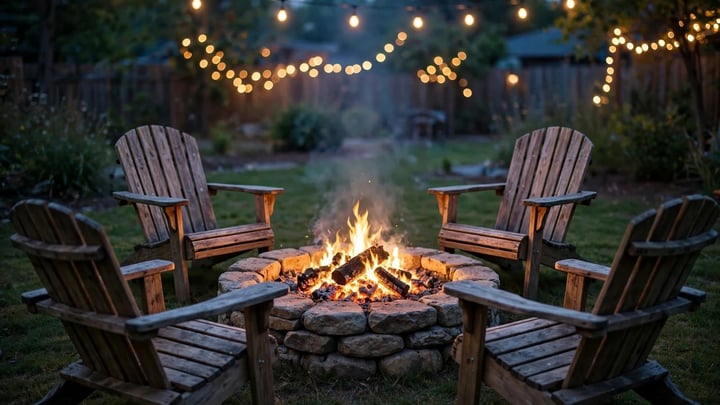
A small patch of lawn in shade or heavy use turns to mud for half the year, and mowing a 10 by 10 ft patch is work without reward. A gravel seating area in the same spot gives a usable outdoor room with almost no upkeep. Lay a weed membrane, edge it with brick or pavers, and fill it with gravel or stone chips, which drain well and stay dry underfoot after rain. Add a compact fire pit table or a bistro set and an outdoor rug to anchor the seating, and the spot becomes the place people actually use. Permeable surfaces such as gravel also reduce muddy patches and puddles, which matters in a small garden where every step crosses the same ground. Keep one small strip of planting around the edge so the gravel reads as a garden room, not a car park.
17. Layer the lighting so the garden works after dark
Lighting is the cheapest way to double the usable hours of a small garden. Start with string lights overhead to create a warm canopy over the seating area, then add one spotlight on the tree or the best planting, and a few low lights along the path so no one trips after dark. Three layers at low brightness beat one bright floodlight, which flattens the garden and annoys the neighbors. Solar lights work for paths and edges where the sun reaches them during the day, but the seating area deserves mains or rechargeable lights that stay bright through the evening. Highlight the edges of the patio and one textured wall or feature plant, and the garden gains depth at night instead of disappearing into darkness at the fence line.
18. Keep one short color palette
Limit the garden to a neutral base with one or two accent colors, and the space feels calm and complete. Greens and creams in the planting and paving, with a single accent such as terracotta pots, navy cushions, or one flowering color repeated in three places, is enough. A common mistake is to buy one of everything: a red pot, a blue chair, a yellow cushion, and five flower colors. Each color competes, and the garden reads as a sale rack rather than a design. The same discipline applies to materials. Two surfaces, such as timber decking and gravel, or pale paving and brick edging, give the garden a clear identity. A third material only earns its place if it solves a real problem, such as a non slip surface by the tap.
19. Choose native and drought tolerant plants for low upkeep
Native and drought tolerant plants need less water, less feeding, and less pruning than thirsty imports, which is what makes a small garden sustainable rather than a weekend chore. Lavender, ornamental grasses, sedum, and native perennials suit sunny dry spots. Ferns and hostas suit shade. Match the plant to the conditions the garden already has, instead of changing the garden to suit the plant, and the maintenance drops to a realistic level: most simple small gardens need roughly 30 to 60 minutes of upkeep a week in the growing season, mostly watering and deadheading. Mulch the beds to hold moisture and suppress weeds, and group plants with similar water needs together so one bed is not overwatered for the sake of one thirsty plant. A garden that survives a two week holiday without a plant sitter is a garden that fits real life.
20. Start with one bed done well, then expand
The best small garden advice is also the simplest: start smaller than feels ambitious. One raised bed, three containers, and one trellis is a complete first season. Learn how the sun moves, how fast the soil dries, and how much time the garden really takes before adding a second bed or a bigger project. A one bed garden that produces salad and herbs all summer beats a whole lawn half dug and abandoned by July. Add the next project only when the first one runs with little effort: a second bed, a fruit tree, or a seating area. Small gardens reward patience more than budget, and the garden that grows one bed at a time is the one still thriving in year three.
Choose by garden size
Not every idea fits every plot, so use the size of the garden to pick the starting set.
A tiny patio or balcony, around 50 sq ft. Skip the lawn and the tree. The starting set is ideas 6, 7, and 8: one pocket planter wall or a trellis, three large containers clustered in odd numbers, and one foldable bistro set. Everything should be movable, since a renter or a small space needs the floor back sometimes. Herbs and salad in the containers, one trailing plant for softness, and the rest of the floor left clear.
A small yard, around 10 by 10 ft to 10 by 20 ft. This is the size most of the 20 ideas are written for. Start with ideas 1 through 4: map the sun, sketch to scale, set two zones, and lay one wide path. Then add one raised bed, one dwarf tree, and the seating. A 10 by 10 ft yard holds a seating zone of roughly 30 percent, planting of roughly 40 percent, a path of roughly 20 percent, and storage of roughly 10 percent, which is a useful split to test on the sketch before buying.
A long narrow side garden, around 8 ft wide. Ideas 13, 4, and 5 matter most: run the lines on the diagonal, keep one wide path, and grow up the fence. A single gentle curve in the path and staggered planting can make an 8 ft wide strip read as 10 to 12 ft wide. Avoid the temptation to line both edges with beds, which leaves a corridor in the middle. One side planted, one side open, and the path weaving between them feels wider than two planted edges with a path squeezed between.
Common mistakes to avoid
Buying plants before measuring the sun. The garden center sells plants for full sun, partial sun, and shade, and the labels mean nothing without a sun map. A shade plant in full sun scorches. A sun plant in shade stretches and never flowers. Map first, buy second.
Too many small pots. Ten tiny pots need watering daily in summer and still look sparse. Three large pots hold moisture longer, look intentional, and are easier to keep alive. If a pot dries out every day, it is too small for the plant in it.
Paths too narrow to use. A path under about 31 inches wide is a gap, not a path. Draw it at real width on the sketch, and walk it with a watering can in hand before the edging goes in.
Planting a full sized tree in a small yard. Check the mature height and spread on the label. A tree that tops out at 30 feet in a 10 ft yard is a pruning job for the next decade, not a focal point.
Forgetting drainage. Containers without drainage holes, beds with no outlet for water, and gravel laid straight onto soil without a membrane all fail the same way: after the first heavy rain. Drainage is not a detail. It is the difference between a garden and a swamp.
Filling every inch. A small garden needs empty space to breathe. Leave part of the patio clear, leave one bed unplanted for the next season, and resist adding one more zone. The empty square foot is what makes the planted ones look good.
FAQ
How do I make a small garden look bigger?
Use the layout, not decoration. Two zones, one wide path, lines on the diagonal, light colored surfaces, and planting that goes up the fence all make the space read larger. A mirror placed to reflect planting adds depth. The fastest way to make it look smaller is to fill it: too many pots, too many colors, and furniture that is too large.
What grows well in a small garden with little sun?
Ferns, hostas, and shade tolerant herbs such as mint and parsley handle low light. Leafy greens such as lettuce and spinach manage with three to six hours of sun. Vegetables that fruit, such as tomatoes and peppers, need six or more hours, so in a shady garden it is better to grow leaves and herbs and buy the tomatoes.
How much does a small garden cost to start?
A first season can start under 50 dollars with repurposed containers, seed, and a bag of compost. One raised bed of 4 by 2 ft runs roughly 50 to 100 dollars in materials. A trellis, a pocket planter wall, and string lights add roughly 100 to 200 dollars more. Start with the bed and the containers, and add the rest only when the first planting is growing.
How much maintenance does a small garden need?
Plan on roughly 30 to 60 minutes a week in the growing season, mostly watering, deadheading, and checking for pests. Containers and pocket planters need water more often than beds, since small volumes of soil dry out faster. Mulch and drip irrigation cut that time further, and native and drought tolerant planting cuts it further still.
Can I have a garden as a renter?
Yes, if everything is movable. Containers, pocket planters hung from removable hooks, a freestanding trellis in a large pot, and a foldable bistro set all come with you when you move. Avoid digging beds into the ground, fixing trellises into walls without permission, and planting anything that cannot be lifted out in a pot.
Conclusion
A small garden works when the layout is decided first and the planting follows it. Map the sun, sketch the plot, set two zones and one wide path, then grow upward and keep the palette short. Start with one bed done well and let the garden grow one project at a time. The gardens that look generous are not the biggest ones. They are the ones where every square foot has a job, and nothing in them is there by accident.



Leave a Reply
You must be logged in to post a comment.