
A modern garden is not a style you buy in one shopping trip. It is a way of arranging a yard so the space feels calm, intentional, and easy to use. The best modern gardens share a few habits: clean lines, a short list of materials, planting chosen for shape first, and lighting that lets the garden work after dark. This guide explains each of those habits in practical terms, with sizes, materials, and trade-offs you can apply to a real yard, whether it is a wide suburban lot or a narrow side garden.
What Makes a Garden Look Modern
A modern garden reads as modern because of what it leaves out. Cottage gardens pile on dozens of plants and colors. A modern scheme strips the design back to a few strong elements and repeats them. That restraint is the whole point, and it is also what makes the style easier to maintain once it is built.
Five traits show up in nearly every successful modern garden. First, geometry: straight lines, right angles, or one confident curve, with nothing wobbly or half finished. Second, a limited palette: two or three hard landscaping materials used consistently from the back door to the fence. Third, repetition: the same plants grouped in blocks and repeated across the garden, rather than one of everything. Fourth, structure that holds through winter: raised beds, clipped evergreens, a pleached tree, or a rendered wall. Fifth, a clear link to the house, so proportions, colors, and materials echo the building and the garden feels like another room.
Modern and contemporary are often used as if they mean the same thing. Strictly speaking, modernist design comes from the early twentieth century and the idea that form follows function, while contemporary simply means current. In a garden, the two overlap so much that most designers treat them together, and this guide does the same.
Start With the Layout: Zones, Lines, and Flow
Layout does more for a modern garden than any single plant or piece of furniture. Before choosing materials, decide what the garden has to do. Most yards need two or three zones at most: a place to sit and eat, a place to relax, and planting or lawn. One or two well proportioned spaces will always look more modern than five small zones squeezed into the same area.
Draw Lines From the House

Lines that start at the house make the garden feel designed for that building. Extend the line of a back wall, a door, or a window into a path, a bed edge, or a change of paving. A rectangular patio that mirrors the footprint of the house is a good example. It looks deliberate because it is tied to the architecture, not dropped onto the lawn at a random angle.
A strong axis also helps a long, narrow garden. Run one straight path down the center or along one side, and place a focal point at the end: a multi-stem tree, a sculptural pot, or a simple water bowl. The eye travels the full length of the garden instead of stopping at the fence.
Give Each Zone a Clear Job
Zoning works best when each area has one job and a surface to match. A dining terrace in large format paving, a lounge corner in decking or gravel, and a lawn or planted area beyond. Changing the surface is enough to signal the change of use. You do not need a fence or a wall between zones.
Size the zones around how they will actually be used. As a planning guide, a dining table for six with chairs pulled out needs a terrace roughly 10 by 12 feet, with about 36 inches of clear space behind the chairs so people can stand up without stepping off the paving. A lounge corner with two chairs and a small table fits in about 8 by 8 feet. These are planning ranges from layout guides, not building standards, so treat them as a starting point and measure your own furniture before committing.
Paths That Are Wide Enough

A common mistake is making paths too narrow to walk comfortably. A main path that two people use side by side works best at about 36 to 48 inches wide. A secondary path to a side gate or a compost area can be 24 to 30 inches. Paths narrower than that feel cramped, and they force planting to be cut back constantly. Keep the path surface level with the beds beside it where possible, so edging stays clean and mowing or sweeping stays simple.
Choose a Short List of Materials
In a modern garden, hard landscaping carries most of the visual weight, because there is so much of it. The material choice sets the style faster than anything else. Pick two or three materials and use them consistently. A fourth material usually adds noise rather than interest.
Large format paving gives the crispest look. Porcelain, sawn sandstone, and granite are the materials most often specified for modern schemes, laid in a straight stack or a long running bond with tight joints. Avoid riven finishes, random patterns, and slabs with a lot of color variation if the goal is a clean, calm surface. Light colored paving reflects light into shaded corners, while dark charcoal paving makes green planting stand out. Both work. The mistake is mixing light and dark paving in the same garden without a reason.
Concrete suits modern gardens well. Poured concrete patios, custom planters, and built-in benches all share the same smooth, quiet finish. Timber brings warmth against that coolness. Use it for decking, slatted screens, or a pergola, and keep the tone consistent. Composite decking is a practical alternative where low upkeep matters, and it reads as timber from a normal viewing distance.
Metal adds a sharp accent. Powder coated steel or aluminum edging keeps bed lines crisp, and Corten steel planters or screens weather to a warm rust color that pairs well with grasses and gravel. Use metal sparingly. One or two metal elements are an accent. Five are a theme park.
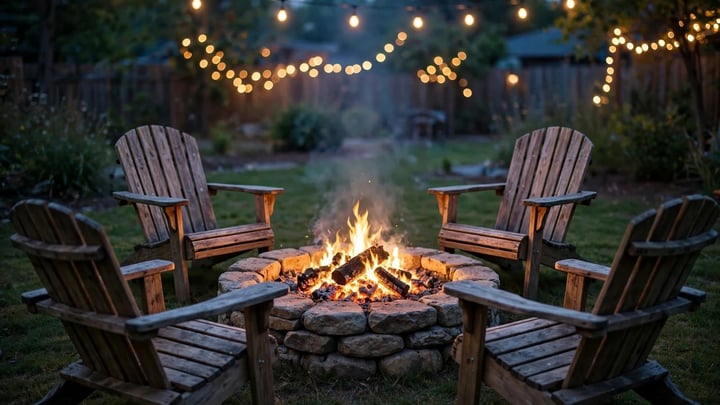
Gravel is the budget friendly workhorse of modern gardens. It costs less than paving, drains well, and suits planting beds, paths, and the ground beneath a bench or a fire bowl. Keep the gravel color in the same family as the paving so the two surfaces sit together. A pale gravel with pale paving reads as one calm surface. A red gravel next to grey paving fights for attention.
What to Avoid in Materials
Mixing too many finishes is the fastest way to make a new garden look dated. Riven stone next to smooth porcelain next to red brick next to timber decking gives the eye nowhere to rest. Another common mistake is choosing paving by the sample alone. A single slab in a showroom looks nothing like forty of them laid together, so check a larger laid area, in daylight, before ordering.
Planting for Structure First, Color Second
Modern planting is about shape and texture, not a riot of color. Structure comes first: evergreens, ornamental grasses, and one or two small trees that hold the design together in every season. Flower color comes second, in restrained drifts rather than scattered singles.
Repetition is the technique that makes this work. Plant the same grass or perennial in blocks of five, seven, or nine, and repeat those blocks across the garden. A single plant dotted here and there reads as an accident. The same plant in a group reads as a decision. Three to five plant varieties, repeated well, will carry a modern garden further than twenty varieties used once each.
Structural Plants That Earn Their Place

Ornamental grasses are the backbone of modern planting. They move in the wind, catch low light, and hold their shape through autumn. Miscanthus, Calamagrostis, and Pennisetum are widely grown choices for US gardens, and they suit the modern look because their form is simple and architectural. Pair grasses with clipped evergreens, such as boxwood or yew in milder climates, to give the garden a solid frame in winter when the grasses are cut back.
A multi-stem tree makes a better focal point than a single trunk tree in most modern gardens. Amelanchier, multi-stem birch, and Japanese maple are common choices, depending on climate and sun. One well placed tree beats three average ones. Put it where it can be seen from the main seating area and from inside the house, and give it room to grow to its mature width rather than planting it against a fence.
Planting by Layer
Layered planting gives a modern garden depth without clutter. The usual layers are groundcover at the front, mid height perennials and grasses in the middle, and a taller anchor, a shrub or small tree, at the back. Keep each layer to one or two varieties so the layers read clearly. A border that mixes fine foliage with bold leaves, and glossy with matte surfaces, has interest without needing more color.
Climate Ready Planting
The 2026 direction in planting is toward climate ready choices: plants suited to local rainfall, heat, and soil, rather than plants that need constant watering and feeding to survive. Native and climate adapted plants usually need less intervention once established, and they support pollinators and local wildlife. Check the USDA hardiness zone for your area before buying, and check sun exposure in the spot where the plant will actually grow. Full sun means six or more hours of direct sun a day. A plant labeled full sun will struggle in a spot that gets three hours of morning light, no matter how good it looks in the nursery.
Edible Plants, Blended In
Edible planting is moving into modern gardens, not as a separate vegetable patch hidden behind the shed, but blended into the design. Herbs edging a path, a fruiting shrub mixed into a border, or ornamental vegetables in a container all earn their place by looking good as well as producing food. Rosemary, lavender, and thyme suit the modern palette because their foliage is grey green and their form is tidy. Keep edible beds in the same raised bed style as the ornamental beds, so the two read as one design.
Modern Garden Lighting That Works After Dark

Lighting is what turns a modern garden from a daytime space into an evening room, and it is also the part most often done badly. The 2026 shift is away from overhead string lights as the main source, and toward low level, integrated lighting that shapes the space from the ground up.
The strongest lighting plans use several quiet layers instead of a few harsh fixtures. Step lights support safe movement. Low path lights guide circulation. Uplights on a tree or a wall create depth. Task lighting over a cooking or dining area makes the space usable. Warm white light, usually 2700 to 3000 Kelvin, feels comfortable around a home. Bright, cool white light makes a garden feel like a parking lot, so keep the color temperature consistent across all fixtures.
Light the edges and the focal points, not everything. A single tree lit from below, a wall washed with soft light, and a path marked at intervals will do more than flooding the whole garden. Fixtures should disappear into the landscape during the day and reveal the important forms at night. Integrated LED strips under the cap of a raised bed or along a step edge are a good example. They define the layout after dark without adding visible clutter in daylight.
Solar fixtures have improved enough to be practical for path and accent lighting in sunny spots, and they avoid trenching for cable. Mains powered, low voltage lighting is still the better choice for the main zones, because it is brighter and more reliable in shade and in winter. Plan lighting before patios and walls are built, because running cable afterward costs more and looks worse.
Water, Shade, and the Practical Parts
A modern garden needs water and shade planned in, not added as an afterthought. Both affect how the garden is used on a hot afternoon, and both are easier to get right during the build.
Shade Structures

A pergola is the most common shade structure in a modern garden, and it also adds architecture. A simple flat roofed pergola in timber or powder coated aluminum, sized to cover the dining table with about 18 to 24 inches of overhang on each side, gives shade without closing the space in. A retractable canopy or a shade sail is a lighter option where a permanent structure would overwhelm a small garden. Whatever the structure, keep its lines and materials consistent with the rest of the garden.
Water Features
A water feature in a modern garden should be simple and quiet. A still water bowl, a narrow rill, or a low wall fountain fits the style. A tall, ornate fountain does not. Water adds sound and reflection, and it gives birds a reason to visit. Keep the feature small enough to maintain easily, and place it where it can be seen and heard from the seating area. A feature tucked behind a hedge is a feature no one enjoys.
Drainage and Watering
Permeable surfaces help a modern garden handle heavy rain. Gravel paths, permeable paving, and open soil all let water soak in rather than pooling on the patio. A slight fall away from the house on any paved area, usually about 1 to 2 percent, sheds water without being visible. Smart irrigation, with soil sensors or a timer tied to weather, is part of the 2026 picture, and it suits modern gardens because it keeps planting healthy without daily attention. Drip irrigation at the base of plants wastes less water than overhead sprinklers and keeps paving dry.
2026 Directions Worth Noting
Several directions stand out in 2026 garden coverage, and they are worth weighing rather than copying wholesale.
Soft minimalism is the most useful of them. The hard lines of modern architecture stay, but ornamental grasses and natural stone textures soften them. It is a correction to the coldest version of modern design, and it suits family gardens better than a bare concrete scheme.
Outdoor rooms continue to grow. Patios and decks are being treated as full living spaces, with built-in seating, storage, and cooking, rather than as a slab with a table on it. The idea is sound when the budget allows it. A built-in bench with storage underneath costs more up front than a freestanding bench, but it holds cushions and tools out of sight and it cannot blow over.
Smart lighting and smart irrigation are becoming normal rather than novel. App controlled lights and sensor led watering are practical where the garden is used most evenings, and they are a waste of money where the garden is used twice a month. Judge the technology by use, not by novelty.
Climate resilient planting and wildlife friendly design are the directions with the longest staying power. A garden that suits its site needs less water, less feeding, and less replacement planting. That is a practical advantage, not just a fashion statement.
Common Mistakes to Avoid
A common mistake is buying furniture before measuring the space. Outdoor sofas are deep, often 36 to 40 inches, and a set that fits in a showroom can crowd a small terrace. Measure the terrace, tape the footprint on the ground, and walk around it before ordering.
A common mistake is planting too close to boundaries and buildings. Plants grow wider than their nursery pot suggests. A shrub planted 12 inches from a fence will be pruned hard every year, and a tree planted under a roof overhang will grow lopsided. Check the mature width on the label and plant for that size, not for the size on the day of planting.
A common mistake is forgetting winter. A garden that relies on summer flowers alone looks bare for five months. Evergreens, grasses left standing through winter, bark, and a structural tree keep the garden presentable in the cold months. Cut grasses back in late winter or early spring, before new growth starts, rather than in autumn.
A common mistake is lighting the garden like a stage. Too many bright fixtures flatten the space and annoy neighbors. Start with fewer lights than you think you need, live with them for a few evenings, and add only where a dark spot causes a real problem.
A common mistake is choosing a lawn where a lawn will not thrive. Deep shade, heavy foot traffic, and very dry soil all work against grass. In those spots, gravel, groundcover, or a planted bed will look better and need less care than a patchy lawn.
A Simple Order of Work
A modern garden comes together more smoothly when the work follows a sensible order. First, watch the garden for a few weeks and note where the sun falls, where water sits after rain, and where people naturally walk. Second, draw a simple plan with zones, paths, and one focal point, and measure the main dimensions. Third, build the hard landscaping: patios, paths, walls, and raised beds. Fourth, install lighting cable and irrigation before planting, while the ground is open. Fifth, plant the structure first, trees and evergreens, then the grasses and perennials. Sixth, add furniture and containers last, once the garden has settled and the scale is clear.
Working in that order avoids the most expensive rework: planting before the patio is built, then digging the plants up again, or laying paving and discovering afterward that a light or a water line should have run underneath it.
Conclusion
A modern garden for 2026 is not about following a trend list. It is about a short set of decisions made well: a layout tied to the house, two or three materials used consistently, planting chosen for structure and repeated with discipline, and lighting that works quietly after dark. Get those right and the garden will look current this year and still look right in five years. Start with the plan, build the bones, and let the planting soften the edges.



Leave a Reply
You must be logged in to post a comment.